Jocelyn Bell Burnell
1943 –
Jocelyn Bell Burnell
Astrophysicist
Physicist
Radio Pulsars
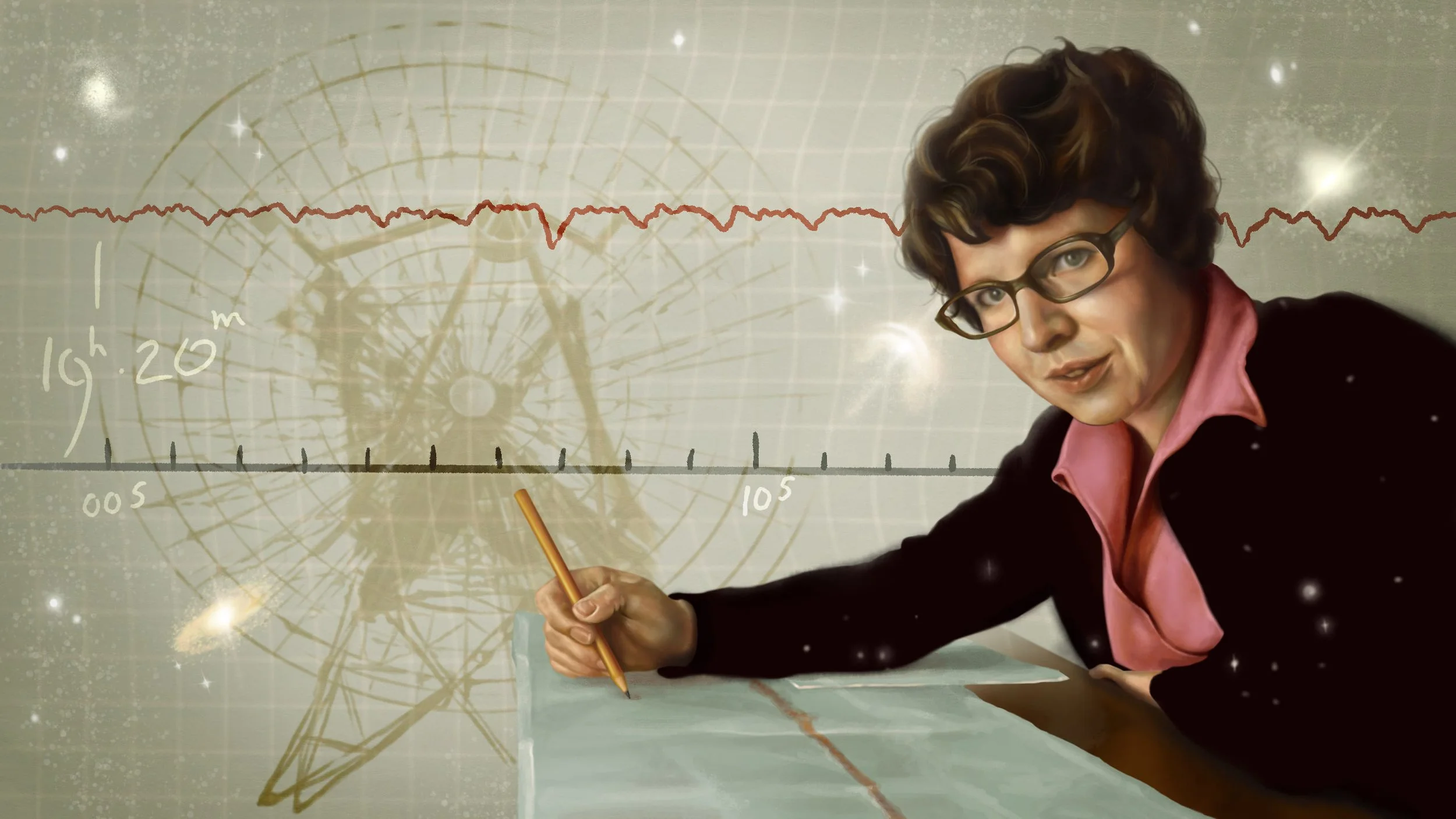
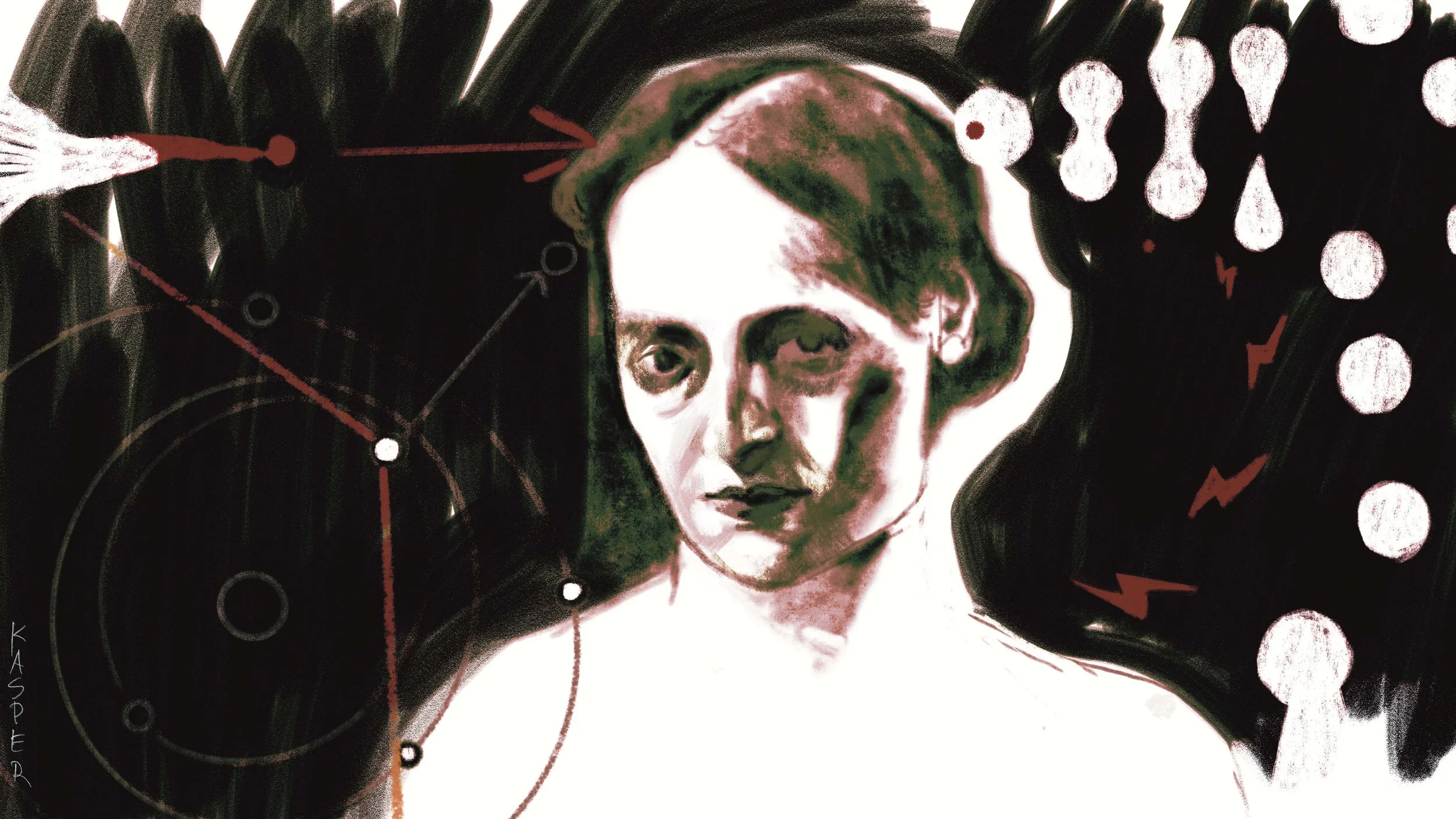
Portrait of Jocelyn Bell Burnell.
“A woman in the shape of a monster ” (Rich, 1971). So opens the poem, “Planetarium” by Adrienne Rich, in which she explores the barriers faced by women in science, figures cast as anomalies, or even ‘monsters,’ through the male gaze. Written in 1968, the poem even alludes to the discovery of pulsars in the prior year, a discovery which would fundamentally alter how scientists understand the nature of gravity, matter, and stellar death. Yet, the woman who first recognized their “battery of signals” remained largely unrecognized until much later in life.
That woman is Jocelyn Bell Burnell.
Becoming the AnomalyWhen asked to share something surprising about herself, Bell Burnell replied that she is religious, an Elder in her church. Surprisingly, perhaps, someone with detailed knowledge of the workings of the universe can reconcile two seemingly polar views. Yet, it was her family’s firm Quaker beliefs that disrupted her secondary school’s traditional stance that girls should learn domestic skills and boys should learn science:
Upon hearing their daughter was barred from science classes, Bell Burnell’s parents intervened, and the secondary school grudgingly allowed Bell Burnell and two other girls to participate. Even as a child, Bell Burnell wasn’t afraid to challenge the belief that the only respectable occupation for women was a homemaker.
Born on July 15, 1943, in Belfast, Northern Ireland, Susan Jocelyn Bell (hereafter referred to as Bell Burnell) was captivated by the mysteries of space from an early age. Her father was an architect for the observatory in Armagh, and one of her favourite books was by Sir Fred Hoyle, the British astronomer who developed the theory of stellar nucleosynthesis, the process by which stars forge chemical elements. In science classes, she discovered her natural aptitude for the field. She remembers deciding one day that she wanted to be a physicist:
Bell Burnell also recalls her fascination with the launch of Sputnik by the Soviet Union in 1957 and so, within the tense and exhilarating climate of the space race (yes, even the United Kingdom felt the pressure to ‘keep up’ with the Soviets) Bell began her undergraduate degree in physics at the University of Glasgow, an institution known for its rigorous physics program, graduating in 1965.
Discovery of PulsarsWhile the 1960s ushered in many advancements in astronomy, including the discovery of cosmic microwave background (CMB) radiation, which provided strong backing for the Big Bang Theory, the decade also marked a golden age of science fiction. People wanted to know if alien life existed and, if so, what did this mean for humanity? Authors like Isaac Asimov, Philip K. Dick, and Ursula K. Le Guin explored profound ethical, social, and philosophical questions raised through contact with the ‘other’. Scientists, too, sought methods of detecting or communicating with potential extraterrestrials, with radio waves emerging as one promising medium. In 1960, Project Ozma marked the first attempt to detect radio transmissions from extraterrestrial life, an initiative that helped establish SETI, the Search for Extraterrestrial Intelligence, funded by NASA until 1993.
Other thinkers, like Lancelot Hogben, sought ways of communicating with possible alien life, developing radioglyphs, a proposed language based on radio signals.
Against this scientific and cultural backdrop, Bell Burnell embarked on a Ph.D. in radio astronomy, the study of radio emissions from space, at the University of Cambridge in 1965. Two years earlier, the first quasars had been discovered, and the scientific community was abuzz with theories on how these active galactic nuclei, powered by supermassive black holes, might offer insight into the origins of the universe. And so, as a research assistant under Antony Hewish, Bell Burnell was tasked with building a radio telescope to detect even more.
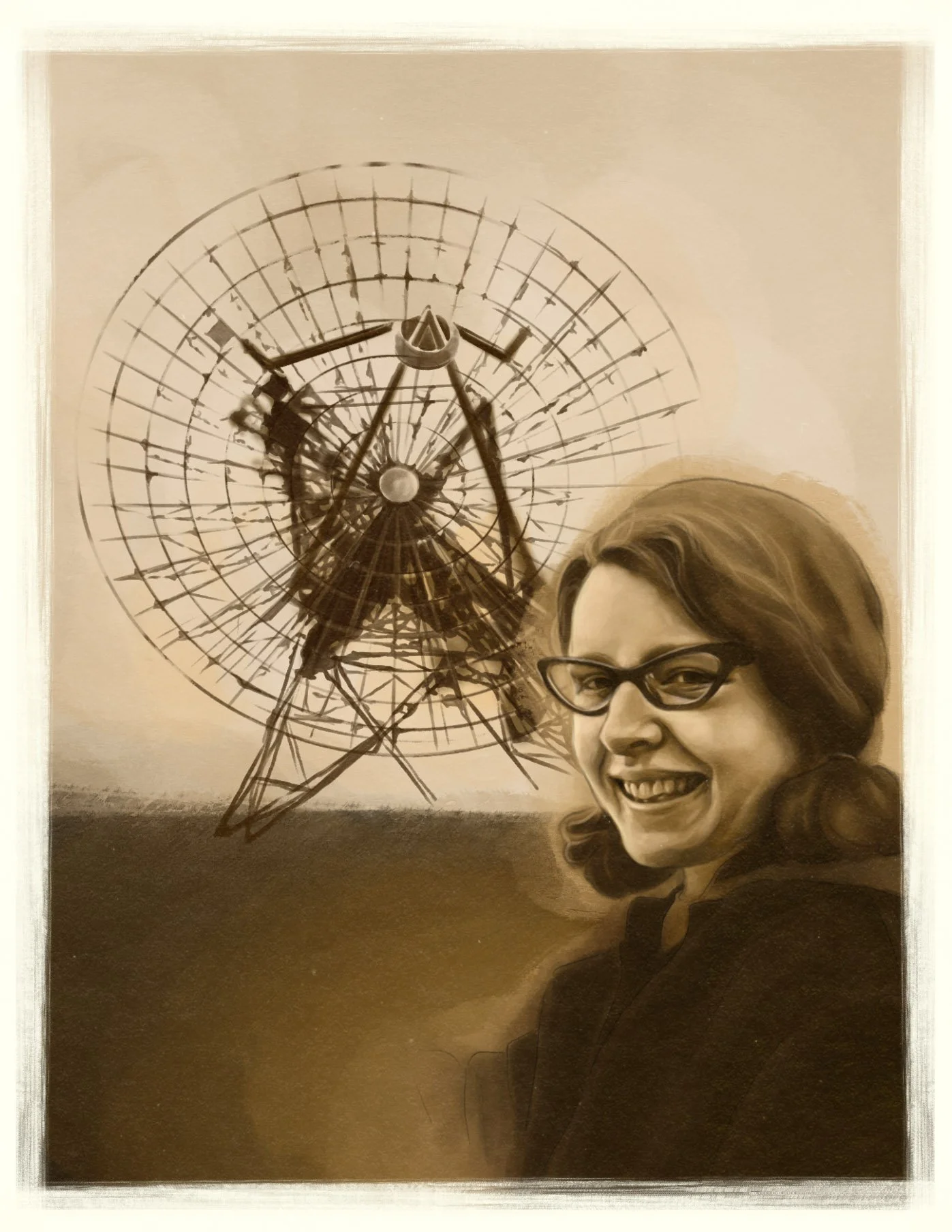
Bell Burnell with the radio telescope she helped build at Cambridge, where she first identified the unusual signals that would become known as pulsars.
Bell Burnell spent the first two years of her PhD hammering stakes into the ground and stringing wiring to construct the massive telescope. Once finished, the telescope’s 120 miles of wires and cables covered four acres. The telescope recorded radio signals on strips of paper, giving printouts somewhat like those of a lie detector. Bell Burnell recalls,
Bell Burnell scoured the printouts, noting down particularly large spikes which indicated a radio signal, potentially from a quasar.
And find quasars she did. Over the course of her Ph.D., she discovered over two hundred (Boatman, 2024). But Bell Burnell’s most consequential contribution to astrophysics began when she noticed a strange pattern, a small anomaly, recorded in just a quarter-inch segment amid miles of chart paper in November 1967. As with any strange pattern, Bell Burnell labelled this new spike with a question mark. It was not uncommon for the telescope to pick up interference from “human-generated interference: arc welders, sparking thermostats, badly suppressed cars” (Walsh, n.d.). As a joke, she would label some bits of interference LGM instead, short for Little Green Men. Maybe the unexpected spike was a signal from a distant alien race?
Yet, something about this latest reading held Bell Burnell’s attention and curiosity. When she pointed out the bizarre undulations in her data, her Ph.D. supervisor initially dismissed the observation.
Her supervisor suggested instead that she had wired the radio telescope incorrectly.
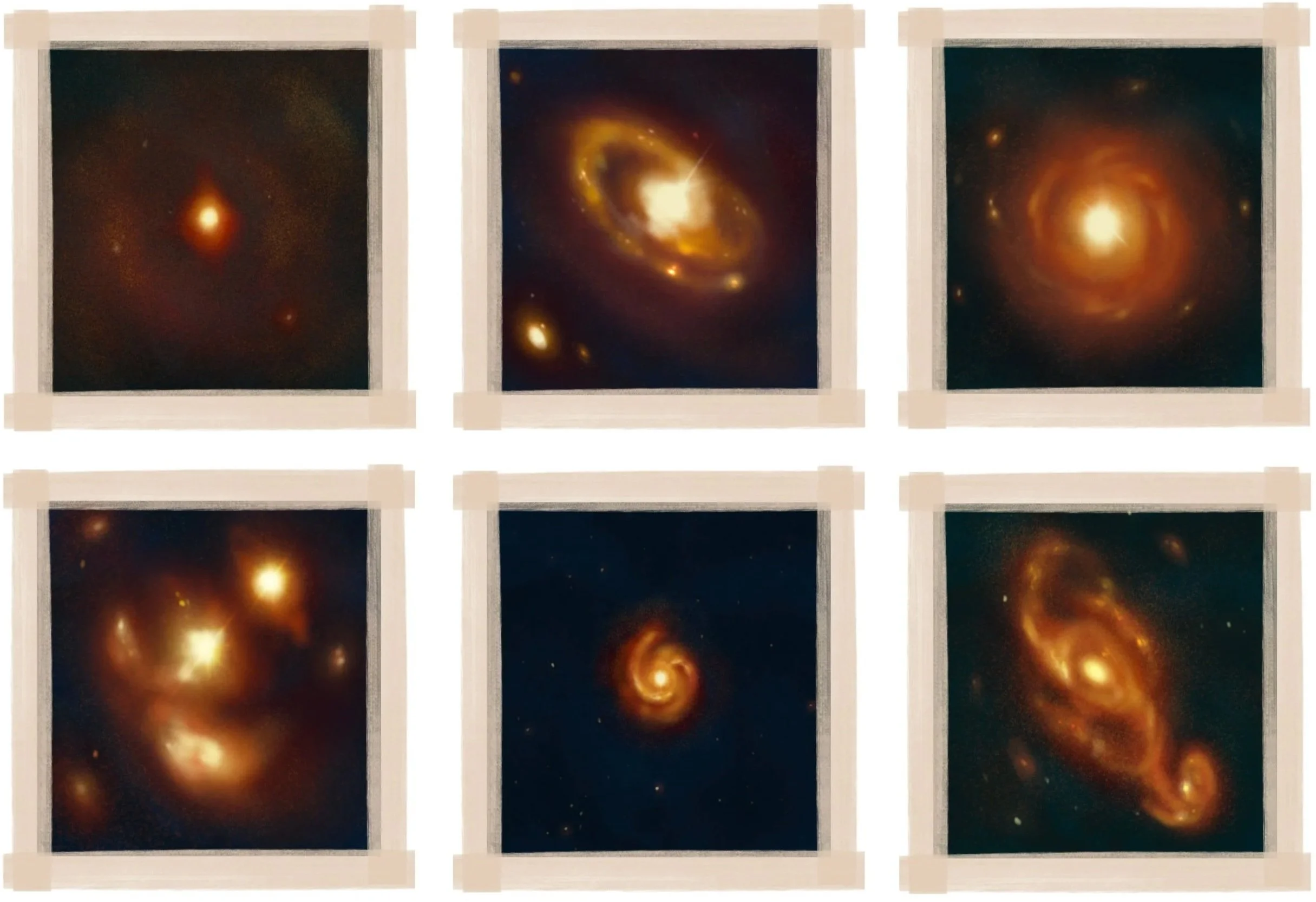
A spread of quasars, the distant and powerful cosmic objects that shaped the scientific context of Bell Burnell’s early research in radio astronomy.
Breaking the MouldThe 1960s were the age of scientific discovery and speculation, but they were also a time of sexism. Bell Burnell recalls being the only woman in a class of fifty at Cambridge and having to endure the tradition of being catcalled each time she entered the classroom. Her ‘outsider’ status had the effect of instilling in her the pressure to excel. She remembers,
Bell Burnell believes this imposter syndrome pushed her to notice every detail, like the new, strange reading from the radio telescope that appeared like clockwork:
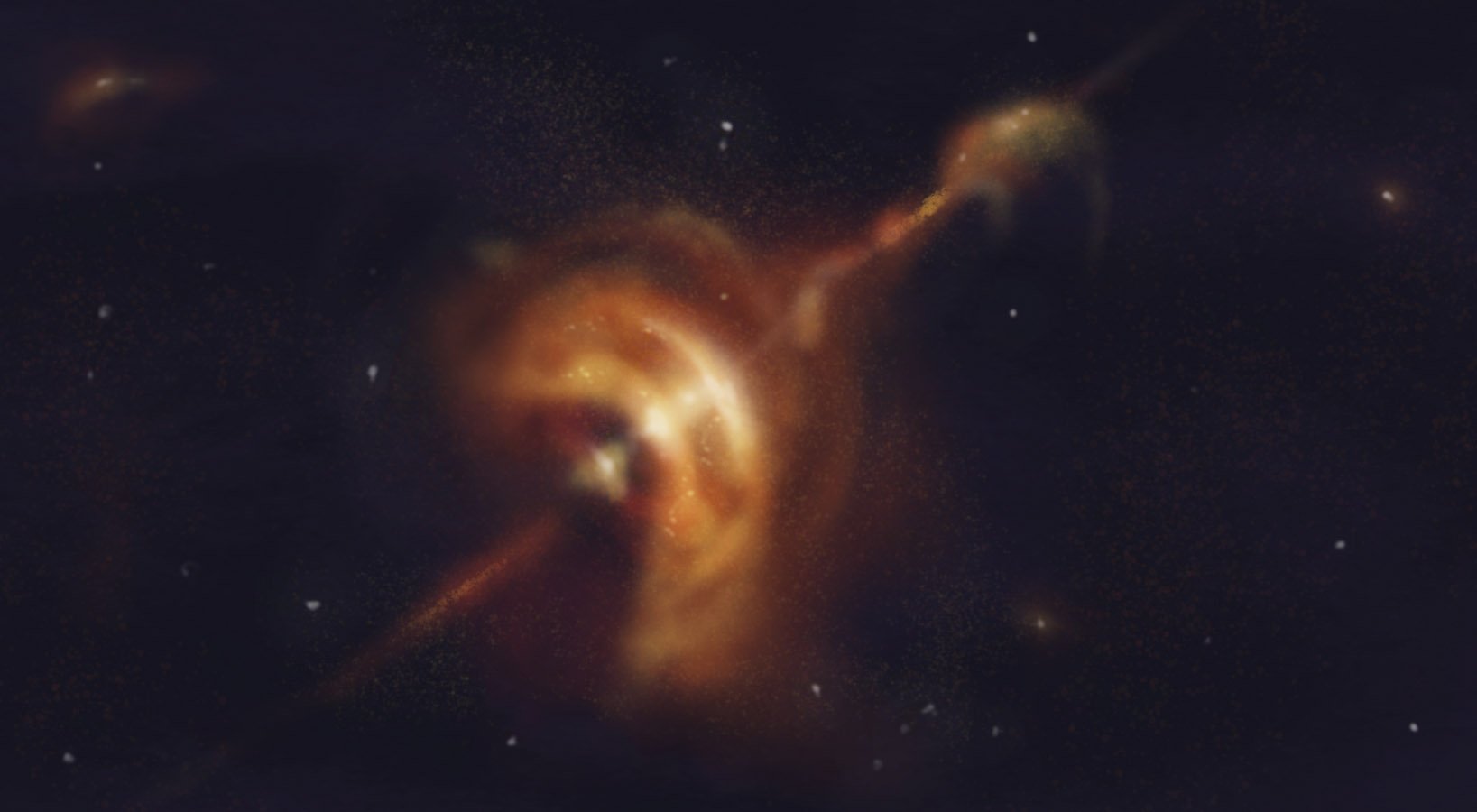
A pulsar, a rapidly rotating neutron star that emits regular beams of radiation detectable from Earth.
Despite being initially hesitant to examine the strange phenomenon further, her supervisor acknowledged that something curious was at work. Curious, because their analysis showed that whatever was producing the strange signal was 200 light-years away, incredibly small, and undeniably intense. Bell Burnell and Hewish made a list of all possible sources of the signal, crossing each one out in turn. Nothing in the scientific record matched what they were seeing on their chart paper. And no source of interference could be determined. The team even entertained, half in jest, half in earnest, the possibility that perhaps they had discovered aliens:
Bell Burnell and Hewish named the pulse LGM-1, later changed to CP1919 (for Cambridge Pulsar at 19 hours, 19 minutes right ascension).
Over the next few months, Bell Burnell recognized similar signals from other areas of the sky. She now had four unidentified ‘pulses’, which were enough for her and Hewish to publish a paper in Nature in February 1968, describing their discovery. Still unable to explain the ‘pulsating sources’, Hewish and Bell Burnell hypothesized that the signals were related to the “stable oscillations of white dwarf or neutron stars” (Hewish et al., 1968, p. 709). Contemporary newspapers detailed the intense reaction of the scientific community: “Excitement among astronomers is greater than at any time since the discovery of quasars” (Nature-Times News Service, March 1968).
Once the extraterrestrial life theory was ruled out, with reporters noting that “whatever the source of the signals was, it is not moving in the way expected of a planet” (Nature-Times News Service, May 1968). Observatories from the Netherlands to the United States began gathering further data on these pulsating stars - dubbed ‘pulsars’.
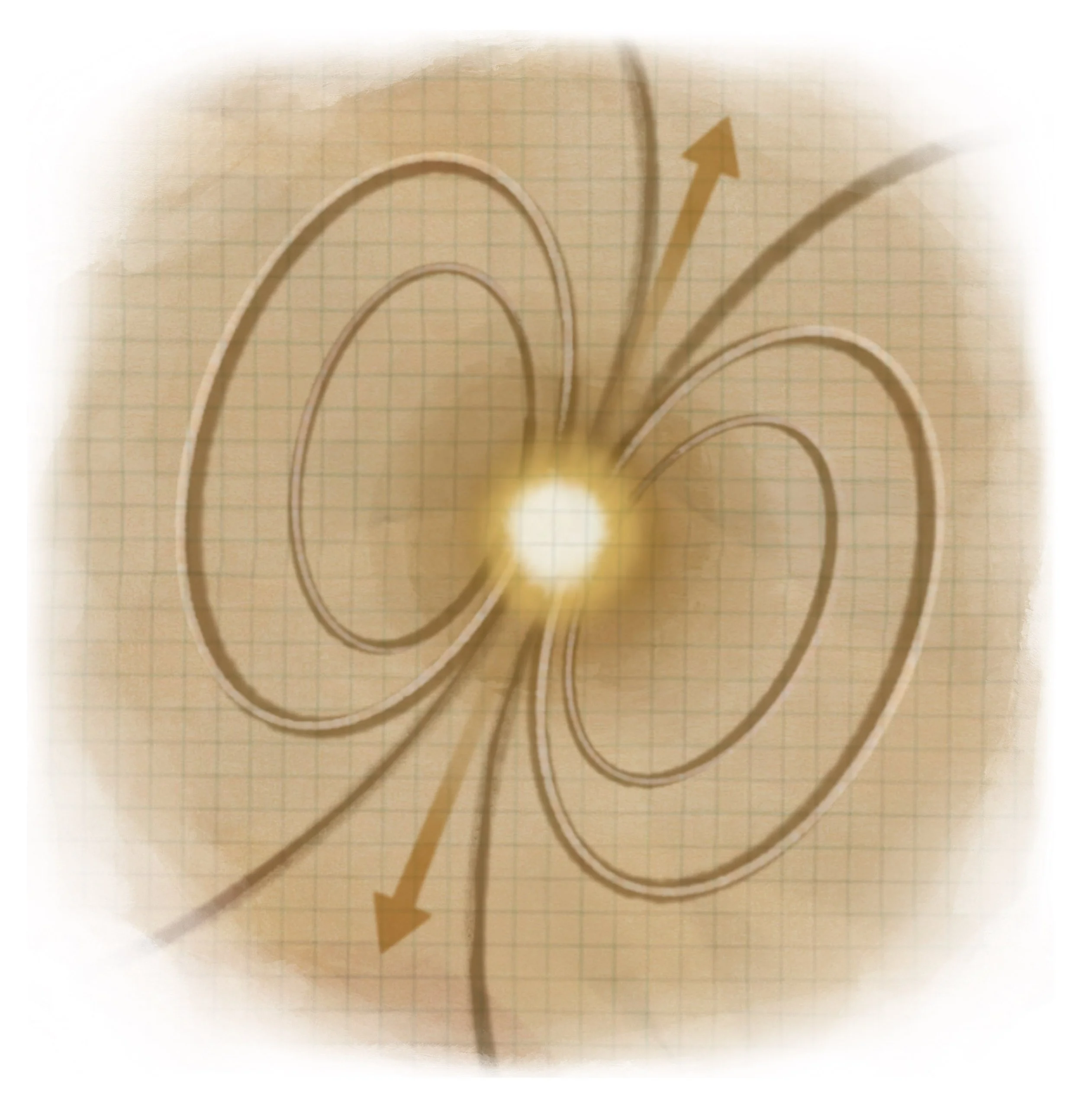
A diagrammatic view of a pulsar, evoking the precision and pattern through which Bell Burnell identified a new kind of celestial object.
The popular press, however, took a different approach to the discovery. Bell Burnell recalls the blatant sexism she experienced as a woman in the predominantly male field. Rather than celebrating her scientific achievement, media outlets objectified and trivialized her:
The press often seemed unsure what to do with a woman scientist, treating her less as a researcher than as a novelty. It seemed they did not know how to react to a woman in science, this peculiar phenomenon, this “monster in the shape of a woman.”
As 1968 came to a close, Bell Burnell married Martin Burnell, a government worker, and left Cambridge as her husband’s job required them to move often. Though she did earn her Ph.D. in radio astronomy in 1969, she dedicated much of her time over the next eighteen years to raising their son, Gavin. She did not abandon her passion for astronomy, however. She held numerous part-time roles in academia, from teaching fellow at the University of Southampton to research fellow at the Royal Observatory in Edinburgh, to project manager for the James Clerk Maxwell Telescope at a time when women building careers were still often treated as an exception. An article from a 1966 Ladies Home Journal describes the anxiety women faced (and still face) when trying to balance both motherhood and career:
Bell Burnell looks back on that period as one in which she, “only just managed to stay in or close to astronomy” (Bell Burnell, 2013, p. 4).
Discoveries, Prizes, and OmissionsIt was in 1974, while she was working at the Mullard Space Science Laboratory at University College London, that the Nobel Prize for Physics was awarded to Professor Martin Ryle, who had organized the team at Cambridge, and Professor Antony Hewish for his “decisive role in the discovery of pulsars.” While Hewish did acknowledge Bell Burnell in his Nobel lecture, citing her “care and diligence," non-threatening, feminine descriptors, perhaps, Bell Burnell was not formally recognized (Nobel Prize Outreach, 1974; Hewish, 1974, p. 183).
This omission sparked controversy within the scientific community. Sir Fred Hoyle, the British astronomer and the author of Bell Burnell’s favourite book as a young student, spoke out against her erasure. Hewish vehemently denied that he had ‘pinched’ the work of his mentee.
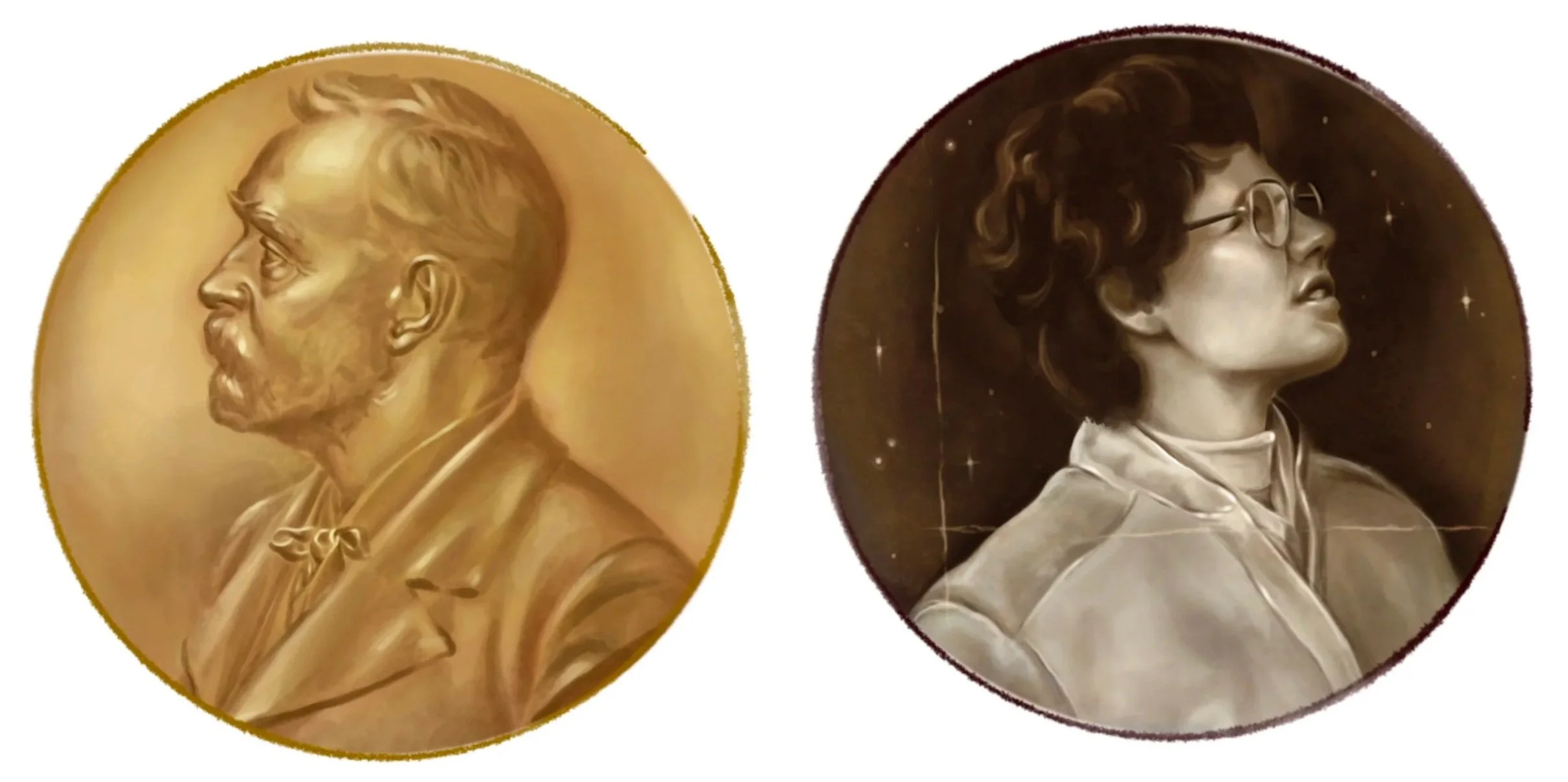
A reimagined pairing of medals: the Nobel Prize awarded for the discovery of pulsars, and Bell Burnell, whose role in that discovery was not formally recognized.
When questioned about the Nobel Prize, Bell Burnell did not side with Hoyle, instead stating that she was “quite delighted” (Special to The New York Times, March 1975) with the awarding of the prize. In a later interview, she remarked that she was “really pleased that pulsars were considered important enough to rate a Nobel Prize” (New York Times Opinion, 2021). By then, astronomy had become central to modern physics, yet the 1974 prize was the first Nobel to recognize work in astronomy, despite the field’s rapid development by that time (Rensberger, 1974).
Pulsars, the first evidence for the existence of neutron stars, are now considered instrumental to an understanding of extreme events in the universe. They are used to study “states of matter, search for planets beyond Earth’s solar system and measure cosmic distances. They also help to find gravitational waves that can point the way to energetic cosmic events like collisions between supermassive black holes” (Rumberg, 2022). What began as a single blip on a piece of chart paper resulted in countless experiments, exciting revelations, and a growing catalogue of thousands of known pulsars.
"A Woman in the Shape of a Monster"As for Bell Burnell, recognition did come, though much later than it should have. In 2018, she was awarded $3 million as part of the Special Breakthrough Prize in Fundamental Physics. Remembering her battle with sexism over the years, Bell Burnell did not hesitate to donate all of the prize money to establish a scholarship for women, underrepresented minorities, and refugee students to study physics. In 2021, she received the Copley Medal, the most prestigious award of the Royal Society in the United Kingdom. From 2002 to 2004, Bell Burnell was president of the Royal Astronomical Society, president of the Institute of Physics from 2008 to 2010, and Chancellor of the University of Dundee from 2018 to 2023. Throughout it all, she continued her advocacy work for women and other minorities in science:
Now in her 80s and officially retired from her career in physics, Bell Burnell continues to inspire through public lectures on astronomy and the barriers she faced as a woman in science.
She finds solace in poetry, even editing a unique work combining the scientific expertise of astronomers with the wordsmithing of poets. She also maintains her Quaker roots. In a lecture to the Australia Yearly Meeting of the Religious Society of Friends (Quakers), she drew parallels between being a Quaker and being a scientist. She noted that whether a Quaker or a scientist (or both), one’s beliefs and understanding of the world should not remain static, but should evolve with experience, just as public understanding of who belongs in science has changed, however incompletely, over time. Bell Burnell recognizes this evolution in Rich’s poem:
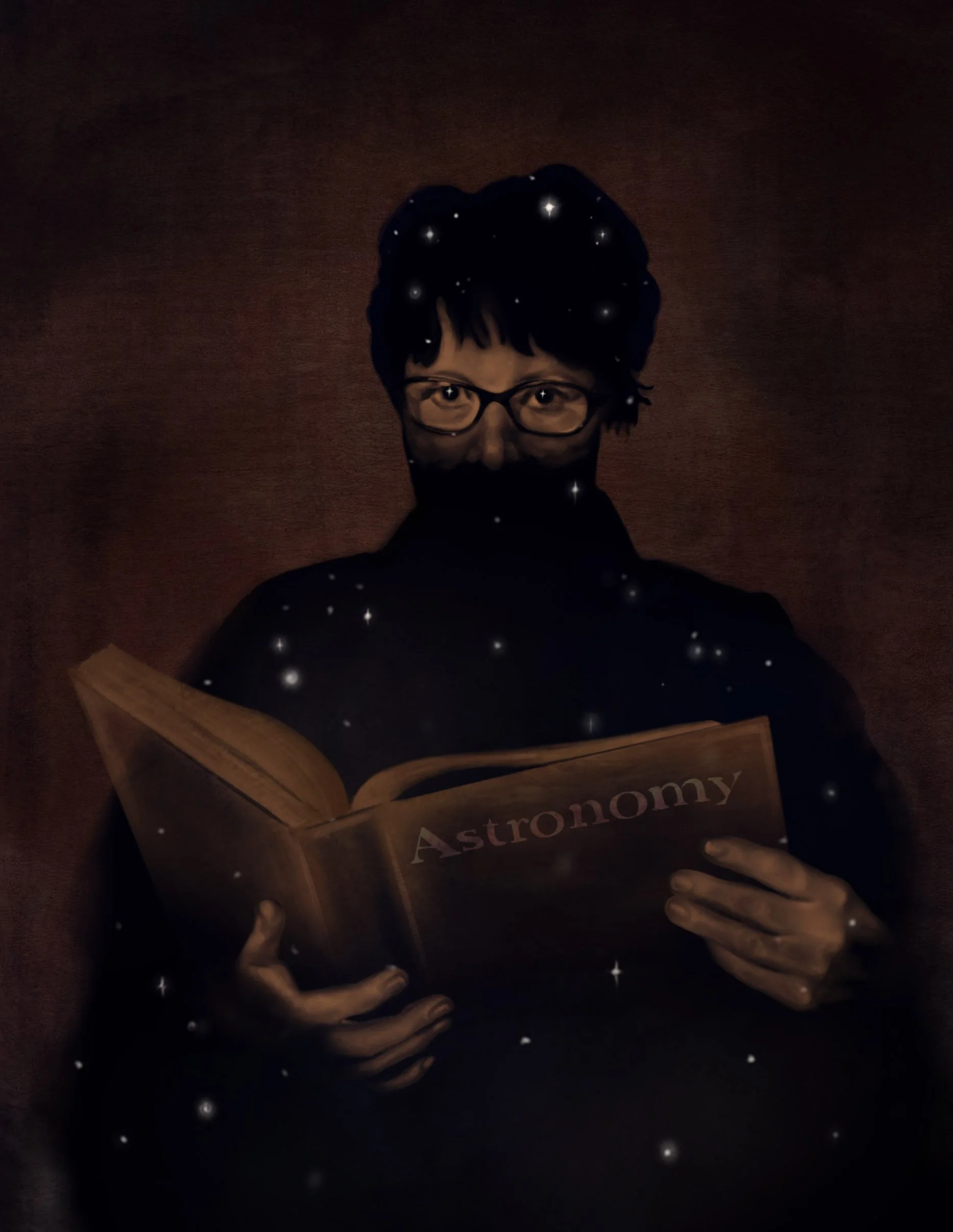
Bell Burnell later in life, imagined as part of the cosmos she helped reveal, still watchful, thoughtful, and turned toward the stars.
As pulsars can be likened to lighthouses, pulsating regular, guiding signals through the blackness of space, so too can Bell Burnell be regarded as a beacon of hope for future scientists who may not fit the typical mould. Women in physics, still sometimes seen as anomalies, still too often treated as exceptions, continue to fight for their right to take up space in a field dominated by men.
Yet, through perseverance, Bell Burnell became, to revisit Rich’s “Planetarium”:
Bell Burnell has been, and will remain, an instrument of change, a scientist, a guide, a mentor, and a guiding light for other women to take up their space in the cosmos.
We have authored and illustrated this entry with care and respect, aiming to achieve the highest standards through diligent, balanced research. We also strive to maintain the highest standards of accuracy and fairness to ensure information is diligently researched and regularly updated. Please contact us should you have further perspectives or ideas to share on this article.
-
Barber, R. (2022, August 15). The radio wave mystery that changed astronomy [Audio podcast transcript]. In Short Wave. NPR. https://www.npr.org/transcripts/1116633624?ft=nprml&f=1116633624
Bell Burnell, J. (2013). A Quaker astronomer reflects: Can a scientist also be religious? The James Backhouse Lecture. https://www.quakersaustralia.info/sites/aym-members/files/pages/files/2013%20Lecture.pdf
Benjamin, L. (1966). How to be a working mother without really crying. Ladies’ Home Journal. https://archive.org/details/ladieshomejourna83janwyet_201809
Boatman, L. (2024, February). Jocelyn Bell Burnell, whose 1967 discovery of pulsars landed her supervisor a Nobel, tells young physicists, “Don’t second-guess yourself.” American Physical Society. https://www.aps.org/apsnews/2024/02/jocelyn-bell-burnell-discovery-pulsars
Crawford, R. (2006). Contemporary poetry and contemporary science. OUP Oxford. https://research.ebsco.com/c/ji5kyf/ebook-viewer/pdf/tdvdy37rtv/page/pp_i
European Space Agency. (n.d.). Cosmic microwave background (CMB) radiation. ESA. Retrieved November 16, 2025, from https://www.esa.int/Science_Exploration/Space_Science/Cosmic_Microwave_Background_CMB_radiation
Hewish, A. (1974, December 12). Pulsars and high density physics [Nobel Lecture]. NobelPrize.org. https://www.nobelprize.org/uploads/2018/06/hewish-lecture.pdf
Hewish, A., Bell, S. J., Pilkington, J. D. H., Scott, P. F., & Collins, R. A. (1968). Observation of a rapidly pulsating radio source. Nature, 217, 709–713. https://doi.org/10.1038/217709a0
Institute of Physics. (n.d.). Jocelyn Bell Burnell: The woman behind the fund. Institute of Physics. https://www.iop.org/about/support-grants/bell-burnell-fund/woman-behind-fund
Loughlin, E. (2015, July 20). My battle with sexism by scientist Jocelyn Bell Burnell who helped unlock the secrets of the universe. Belfast Telegraph. https://www.belfasttelegraph.co.uk/life/my-battle-with-sexism-by-scientist-jocelyn-bell-burnell-who-helped-unlock-the-secrets-of-the-universe/31388068.html
Nature-Times News Service. (1968, March 8). Pulse beat from new star. The Times, p. 1. https://link.gale.com/apps/doc/CS17002088/TTDA?u=guel77241&sid=bookmark-TTDA&pg=1&xid=e65bad3c
New York Times Opinion. (2021, July 29). I changed astronomy forever. He won the Nobel Prize for it [Video]. YouTube. https://www.youtube.com/watch?v=NDW9zKqvPJI
Nobel Prize Outreach. (1974). Nobel Prize in Physics 1974: Summary. NobelPrize.org. https://www.nobelprize.org/prizes/physics/1974/summary/
Rensberger, B. (1974, October 16). Chemist and two astronomers given Nobel Prizes. The New York Times. https://www.proquest.com/hnpnewyorktimes/docview/119972794/C7BCAC9904040D9PQ/1?accountid=11233&sourcetype=Newspapers
Rich, A. (1971). Planetarium. In The fact of a doorframe: Selected poems 1950–2001. W. W. Norton & Company. https://www.poetryfoundation.org/poems/46568/planetarium-56d2267df376c
Rumberg, A. (2022, September 22). Jocelyn Bell Burnell: Discovered pulsars. Frontiers. https://www.frontiersin.org/news/2022/09/22/children-in-science-jocelyn-bell-burnell-discovered-pulsars
SETI Institute. (n.d.). Project Ozma. SETI Institute. https://www.seti.org/research/seti-101/project-ozma/
Special to The New York Times. (1975, March 22). Hoyle disputes Nobel physics award. The New York Times. https://www.proquest.com/newspapers/hoyle-disputes-nobel-physics-award/docview/120429232/se-2
Spradley, J. L. (2024). Jocelyn Bell Burnell. EBSCO Research Starters. https://www.ebsco.com/research-starters/biography/jocelyn-bell-burnell
StarChild Team. (n.d.). Jocelyn Bell Burnell. NASA StarChild. https://starchild.gsfc.nasa.gov/docs/StarChild/whos_who_level2/bell.html
Walsh, L. (n.d.). Journeys of discovery. University of Cambridge. https://www.cam.ac.uk/stories/journeysofdiscovery-pulsars
-
Website Name: The Matilda Project
Title of Entry: Jocelyn Bell Burnell, Astrophysicist: Making Space for Others
Author: Katie McLean
Illustrator: Juno Shemano
Editor: Shehroze Saharan
Original Publication Date: May 03, 2026
Last Updated: May 03, 2026
Copyright: CC BY-NC-ND
Webpage Specific Tags: Jocelyn Bell Burnell; Astrophysicist; Radio astronomy; Pulsars; Pulsar discovery; Neutron stars; Cambridge University; University of Glasgow; University of Cambridge; Antony Hewish; Martin Ryle; Nobel Prize controversy; Scientific recognition; Women in science; Women in physics; Gender bias in science; Sexism in academia; Quaker scientist; Science and religion; Science and faith; Radio telescope; LGM-1; CP1919; Discovery in astronomy; History of astrophysics; History of astronomy; Scientific perseverance; Scientific omission; Underrecognized scientists; Breakthrough Prize; Copley Medal; Royal Astronomical Society; Institute of Physics; Diversity in STEM; Refugee students in STEM; Physics education; Public science advocacy; Scientific mentorship; Belfast; Northern Ireland; Cambridge radio telescope; Quasars; Space race; Scientific anomalies; Women in STEM; Inclusion in science; Astronomy and poetry; Adrienne Rich; Planetarium poem; Representation in science; Barriers in science; Scientific legacy.
Website Tags: The Matilda Project, The Matilda Effect; Margaret W. Rossiter; Matilda Joslyn Gage; Implicit bias; Unconscious bias; Gender attribution bias; Scientific recognition bias; Gender discrimination in academia; Stereotype threat; Pay gap in STEM; Glass ceiling in science; Sexism in scientific research; Gender stereotypes in education; Gender bias in peer review; Bias in STEM hiring practices; Impact of gender bias on scientific innovation; Underrecognition of female scientists; History of women in science; Women scientists in history; Notable women in science; Pioneering women scientists; Women Nobel laureates; Female role models in science; Gender disparities in scientific research; Women's suffrage movement; Historical women's rights leaders; Historian of science; STEM gender gap; Women in STEM; STEM education; Challenges faced by women in STEM; Representation of women in tech; Initiatives to support women in STEM; Gender equity in STEM education; Encouraging girls in STEM; STEM outreach programs; Diversity in STEM curriculum; Equity, Diversity, Inclusion; Equity in education and workplace; Diversity training; Inclusion strategies; Inclusive leadership; Gender equality; Racial equity; Pay equity and transparency; Representation in media.
-
APA Citation:
McLean, K. (2026, May 3). Jocelyn Bell Burnell, Astrophysicist: Making Space for Others. The Matilda Project. https://www.thematildaproject.com/scientists/jocelyn-bell-burnell
Author
Katie McLean
Manager, Program Development, Centre for Advancing Responsible and Ethical Artificial Intelligence (CARE-AI), University of Guelph
As Manager of Program Development for the Centre for Advancing Responsible and Ethical Artificial Intelligence (CARE-AI) at the University of Guelph, Katie develops multi-modal training programs for a diverse audience, ranging from high school students to university staff and faculty, entrepreneurs, and industry professionals. She draws on her interdisciplinary experience in teaching, curriculum development, the heritage and library sectors, and instructional technologies to create pedagogically sound and engaging training. A lifelong learner, she has lived and worked on three continents, participating in community-based projects and education initiatives, including supporting English language learners, curating art and music displays, and interpreting archaeological sites for visitors of all ages in both French and English.
Illustrator