Lise Meitner
1878 – 1968
Lise Meitner
Physicist
Nuclear Fission
Radioactivity
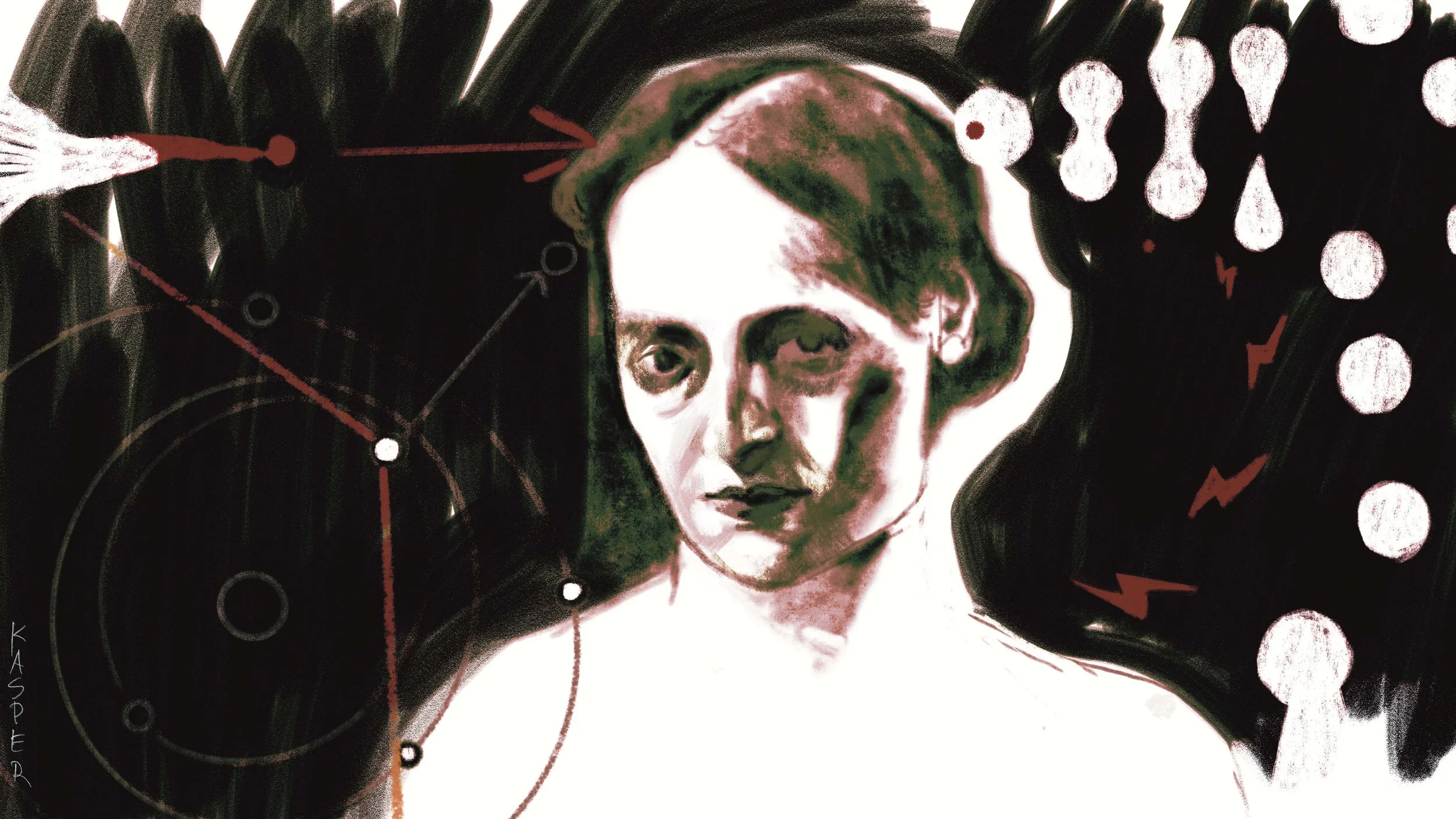
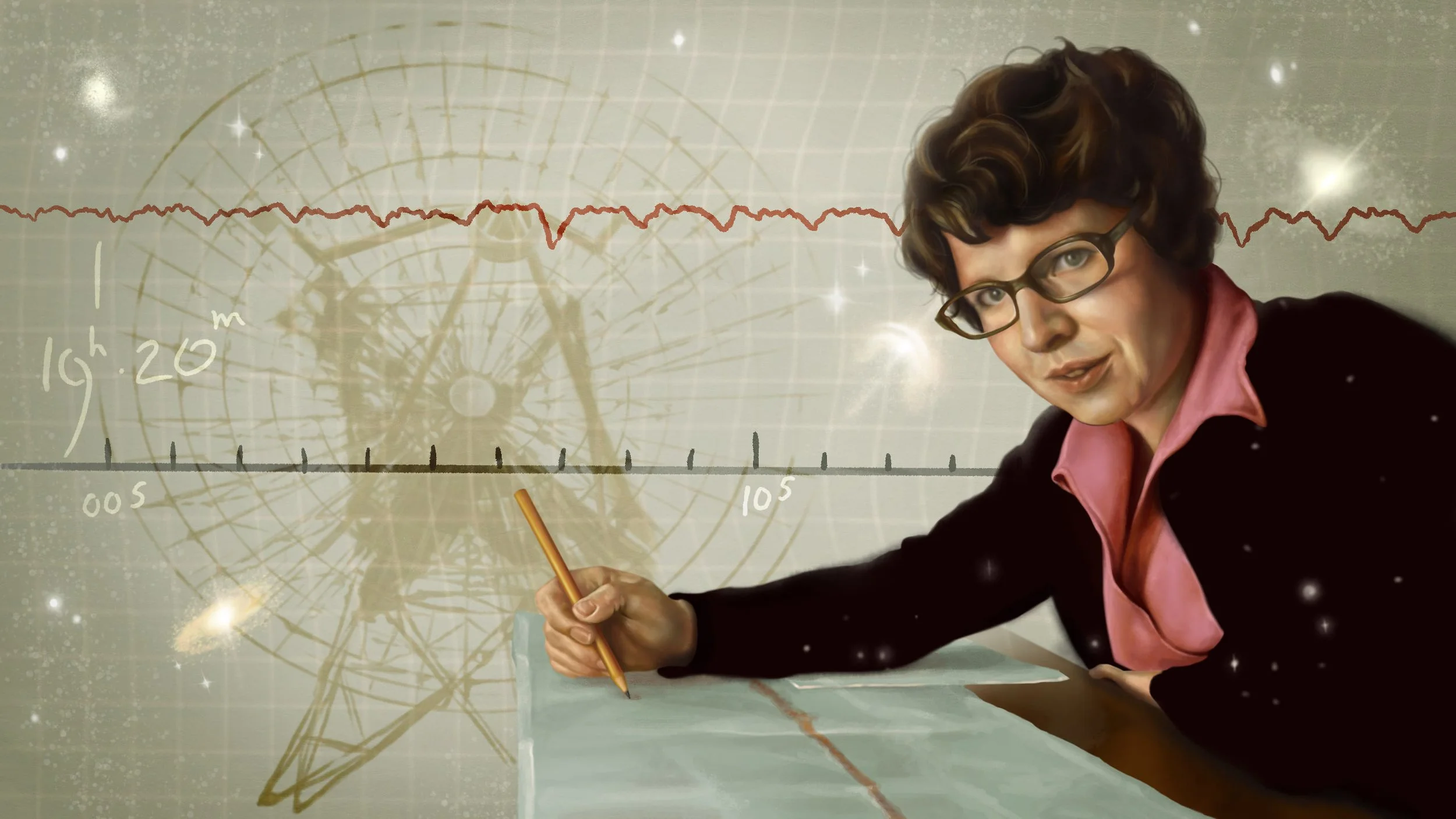
Portrait of Lise Meitner.
Outside Lecture HallsLise Meitner’s scientific life did not begin in a laboratory or lecture hall, but in a city that had not yet decided whether women like her belonged in science at all.
Born on November 7, 1878, in Vienna, then part of Austria-Hungary, she grew up in a society where intellectual curiosity in girls was tolerated only up to a point and rarely rewarded with formal opportunity beyond it. The distance between her early fascination with mathematics and physics and a scientific career was shaped less by talent than by access: private examinations, unofficial study, and years of work before she could enter the institutions that trained scientists.
Meitner was the third of eight children born to Hedwig Skovran and Philipp Meitner in a Jewish family that was largely secular and culturally assimilated. For girls drawn to mathematics, it was also a city of closed doors. Higher education was barred to women, and even the qualifying examinations required for university admission had to be pursued through private tutoring and family persistence.
From an early age, Meitner was drawn to numbers, patterns, and abstract problems. Her parents supported those interests, hiring a private tutor when it became clear that ordinary schooling could not contain her abilities. At fourteen, barred from the secondary schools that prepared boys for university, she began studying at home for the external qualifying examination that would eventually allow her to attend university lectures. Austria did not formally admit women to universities until around 1900, and Meitner’s education unfolded through years of self-study and persistence. In 1901, after passing the qualifying examinations as an external candidate, she enrolled at the University of Vienna.
She initially studied mathematics, physics, and philosophy, but soon recognized that physics offered what she sought most: a quantitative language for describing the order of nature.
Meitner later rejected the expectation that marriage and domesticity should define a woman’s future, writing,
In Vienna, she encountered two formative influences. Franz Exner, a physicist known for his work in experimental science and teaching, introduced her to experimental research in radioactivity, while Ludwig Boltzmann, one of the great theoretical physicists of the era, shaped her intellectual outlook more deeply. Boltzmann was a passionate defender of atomic theory at a time when many physicists still doubted the existence of atoms. He argued that radioactivity offered compelling evidence that matter was composed of discrete, invisible units, a view that resonated strongly with Meitner. She later recalled his “enthusiasm and vision of physics” as transformative, teaching her that physics sought to uncover the unseen structures governing the visible world (Nanal, 2017, p. 194).
In 1905, Meitner completed a doctoral dissertation on heat conduction in inhomogeneous solids, a mathematically demanding study requiring advanced differential equations. In February 1906, she was awarded the doctorate, becoming only the second woman to receive a science doctorate from the University of Vienna. The achievement drew public attention, but it did not open equivalent professional doors. Research positions for women were rare, and positions in physics rarer still.
Meitner took a position teaching at a girls’ school while continuing her own research in the evenings. Working in borrowed spaces with improvised equipment, she investigated the absorption of alpha and beta particles in metal foils and devised a method for generating a collimated alpha beam, allowing her to study atomic structure through scattering experiments. These were original contributions at the frontier of radioactivity, not student exercises.
This double life as a schoolteacher by day and experimental physicist by night helped shape her scientific character. She learned to design precise experiments under constraint, build apparatus from limited resources, and persist in institutions that did not expect her presence. Those early experiments also convinced her that she was capable of independent research and ready for a larger scientific stage.
In 1907, supported by her parents and guided by Boltzmann’s high regard for German physics, Meitner left Vienna for Berlin. She was drawn by the presence of Max Planck, the leading German theoretical physicist whose work would help found quantum theory, and with whom she hoped to study more closely. The move became a turning point, leading to decades of collaboration and, eventually, to nuclear fission.
At the time, though, it was a more immediate step: a young woman with a doctorate and a trunk of notebooks heading toward a university that still did not officially admit women to its lectures.
Side EntrancesWhen Lise Meitner arrived in Berlin in 1907, she entered one of the most dynamic scientific centres in Europe. German physics was changing rapidly, shaped by new work on radiation, atomic structure, and energy. Yet for all its intellectual openness, Berlin remained socially rigid. Women remained anomalies in scientific spaces, and Meitner’s participation depended on permissions, exceptions, and physical separation from the work she had come to do.
One of her first goals was to attend the lectures of Max Planck. Although Planck generally barred women from his lectures, Meitner was granted special permission, a sign of recognition that also underscored how precarious her position remained. The exception did not amount to belonging. It marked her as tolerated, not fully admitted.
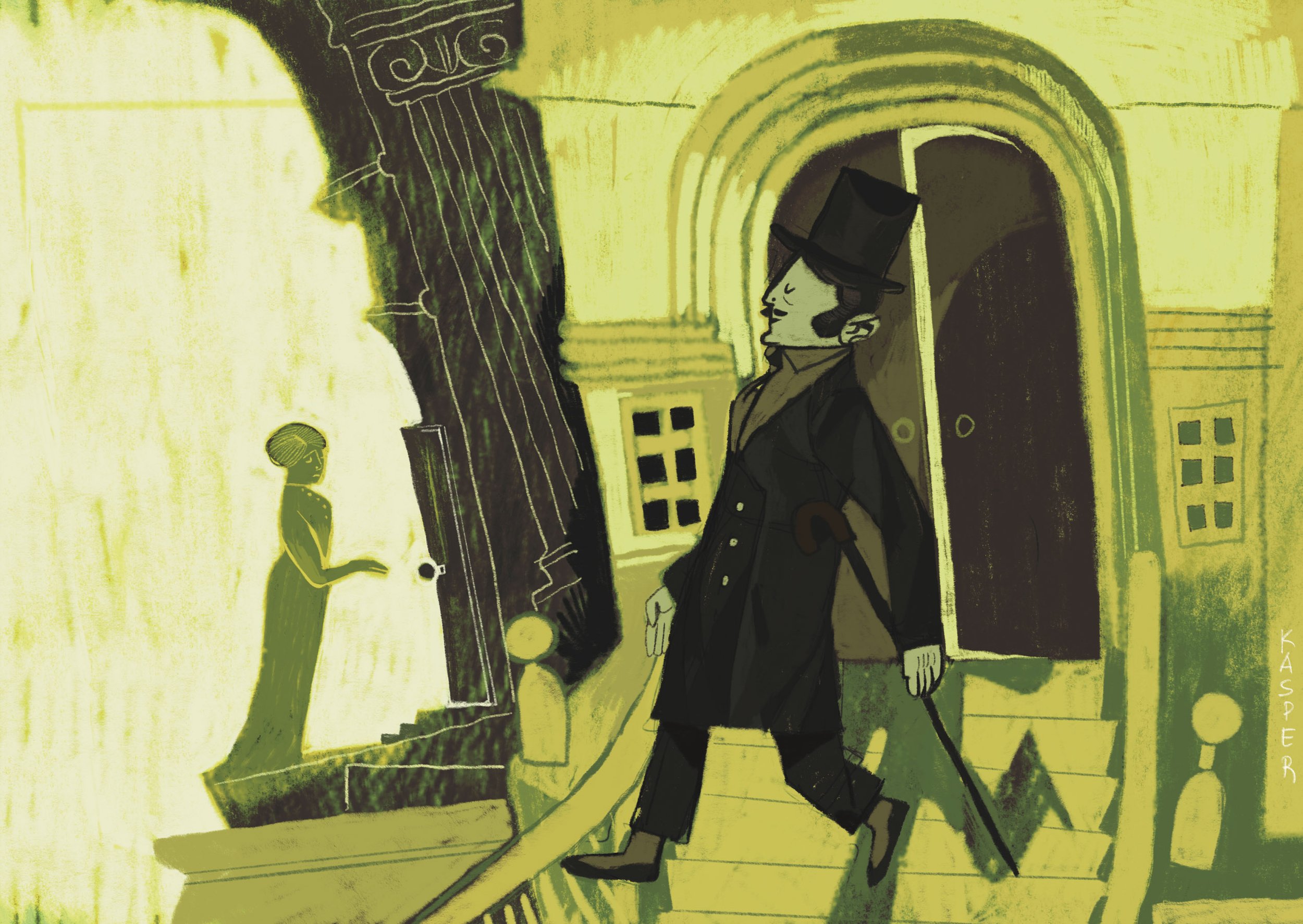
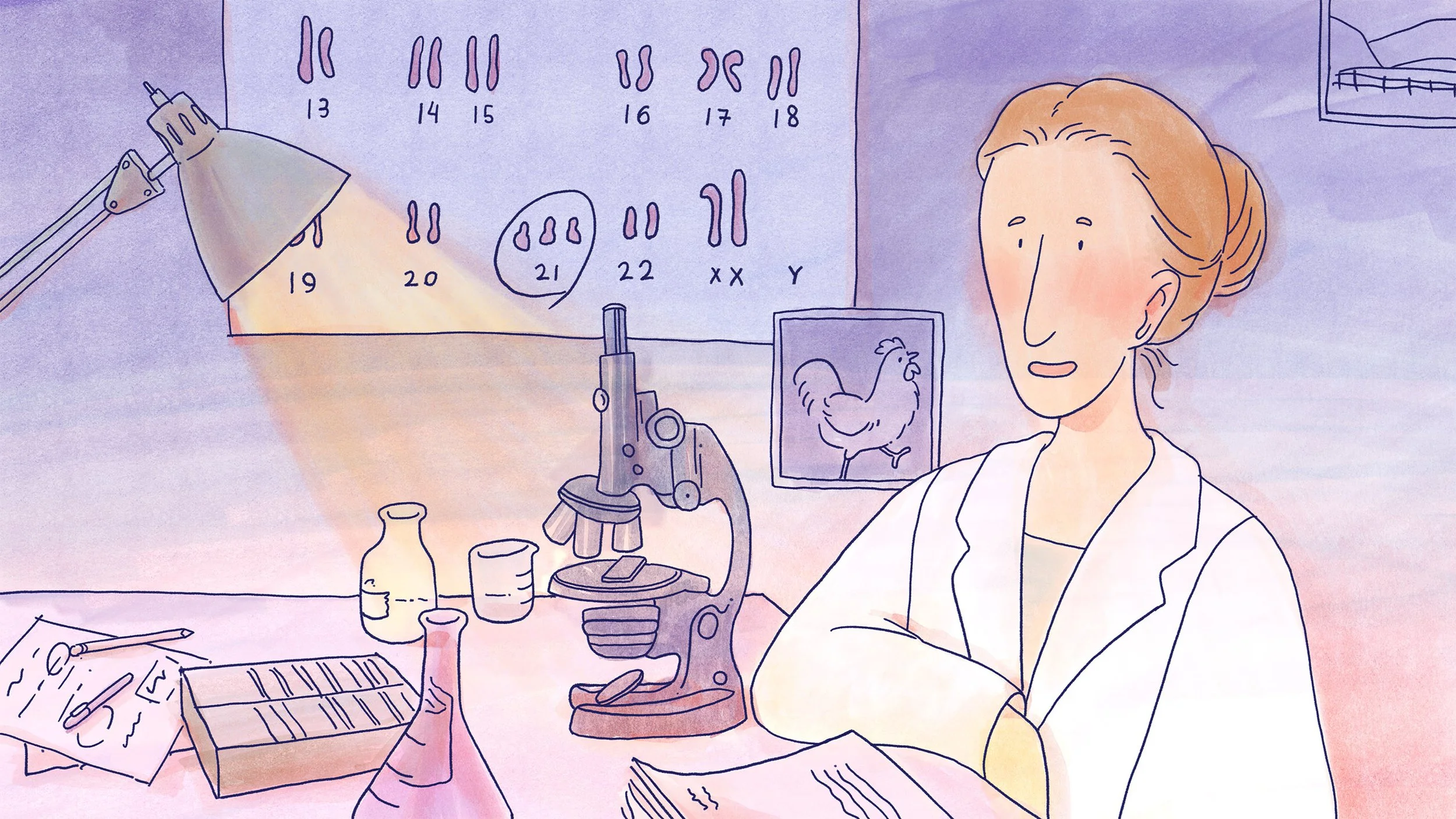
In Berlin, Meitner was barred from the main laboratories and made to enter through a side entrance, an early sign of the exclusions that shaped her scientific career.
More consequential was her meeting with Otto Hahn, a young radiochemist already building a career in the study of radioactivity. The two quickly recognized the complementarity of their skills. Hahn brought chemical expertise and greater institutional access. Meitner brought physical insight and experimental precision. Their collaboration would last more than three decades and help shape nuclear science, but it began under conditions that made clear how provisional Meitner’s place still was.
The Chemistry Institute in Berlin was formally closed to women. Its director, Emil Fischer, the prominent chemist who led the institute, refused to allow Meitner into the main laboratories, citing concerns about women’s hair near open flames, an objection he did not apply to his own beard. Instead, Meitner was assigned a small basement room originally intended as a carpenter’s workshop. It had a separate entrance, and for a time she was barred from other parts of the institute altogether.
Even basic facilities were inaccessible. To use the toilet, she had to leave the building and cross the street to a restaurant. She could work, but only on restricted terms and at the edges of the institute.
During these early Berlin years, Meitner held no formal appointment and received no salary. She was listed as an ‘unpaid guest’ at the newly founded Kaiser Wilhelm Institute of Chemistry, where Hahn worked as a scientific associate. To supplement her parents’ financial support, she translated scientific papers from English into German. Her time went to calculations, apparatus design, and correspondence, all without institutional security.
Despite these constraints, science advanced quickly. In the basement laboratory, Hahn and Meitner began a series of investigations into radioactive decay that soon drew attention. Their work was unusual because it joined chemistry and physics at a moment when radioactivity demanded both. Some of their earliest important results emerged under precisely the conditions that denied Meitner full standing within the institution.
Change came slowly.
In 1909, when women’s education was formally sanctioned in Germany, Meitner was finally permitted to enter the Chemistry Institute through the main entrance. In 1912, Planck appointed her as his assistant, making her the first woman in Prussia allowed to grade university examinations. The appointment marked real progress, though not equality. When she later became a scientific associate at the Kaiser Wilhelm Institute, her salary remained significantly lower than that of male colleagues doing comparable work.
With a regular appointment came expanded laboratory space and the establishment of what became known as the Hahn-Meitner laboratory. Separating chemistry and physics experiments reduced contamination and improved the reliability of their measurements. Meitner also developed training procedures for handling radioactive materials, making it possible to study weak radioactivity with greater precision. These contributions were practical, methodological, and foundational to the work that followed.
The First World War interrupted this progress. Hahn was called to military service, while Meitner worked as an X-ray technician and nurse in a military hospital, applying her knowledge of radiation to medical care. Throughout much of this period, she also continued overseeing laboratory work and maintaining correspondence, helping ensure that their research survived his absence.
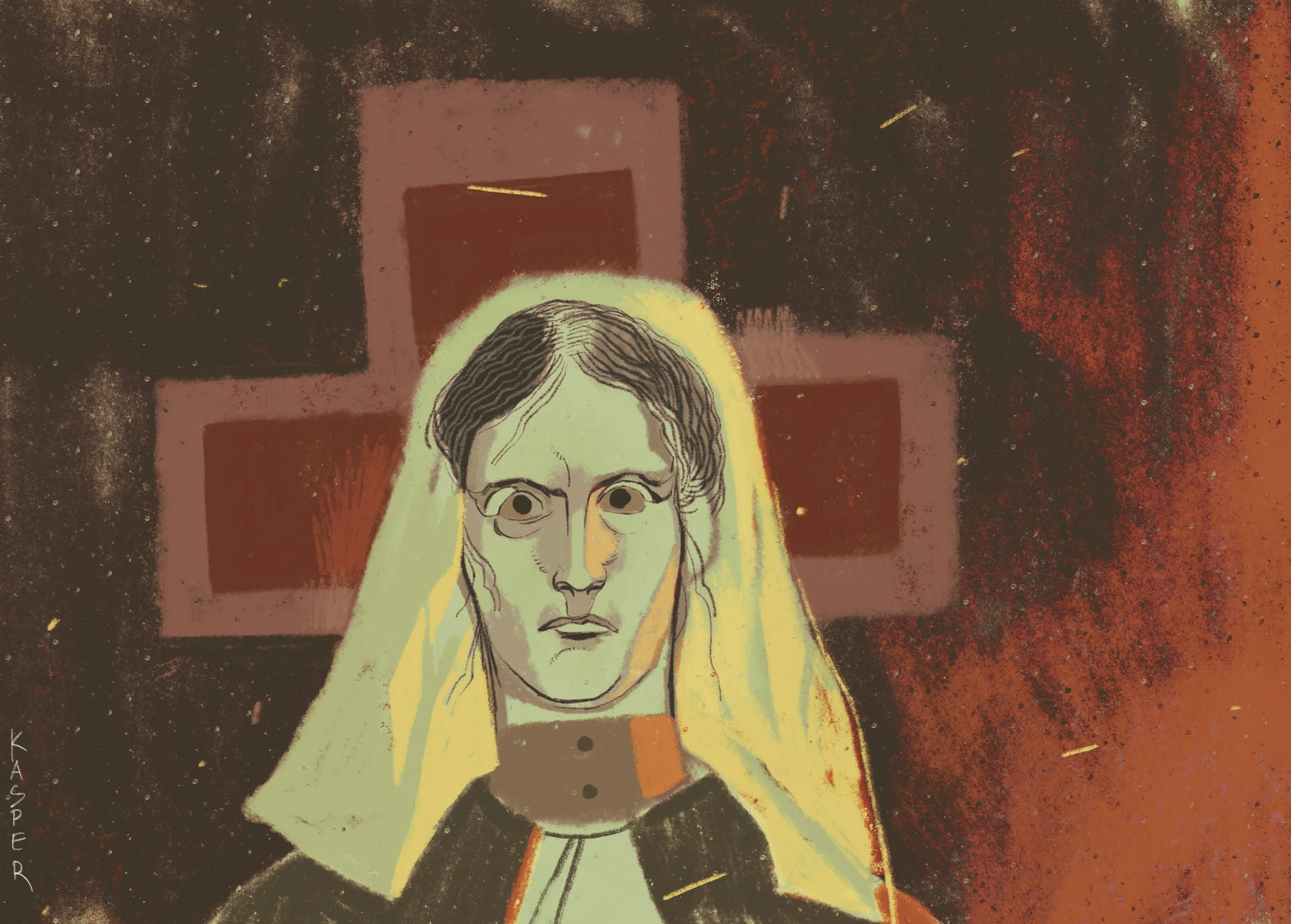
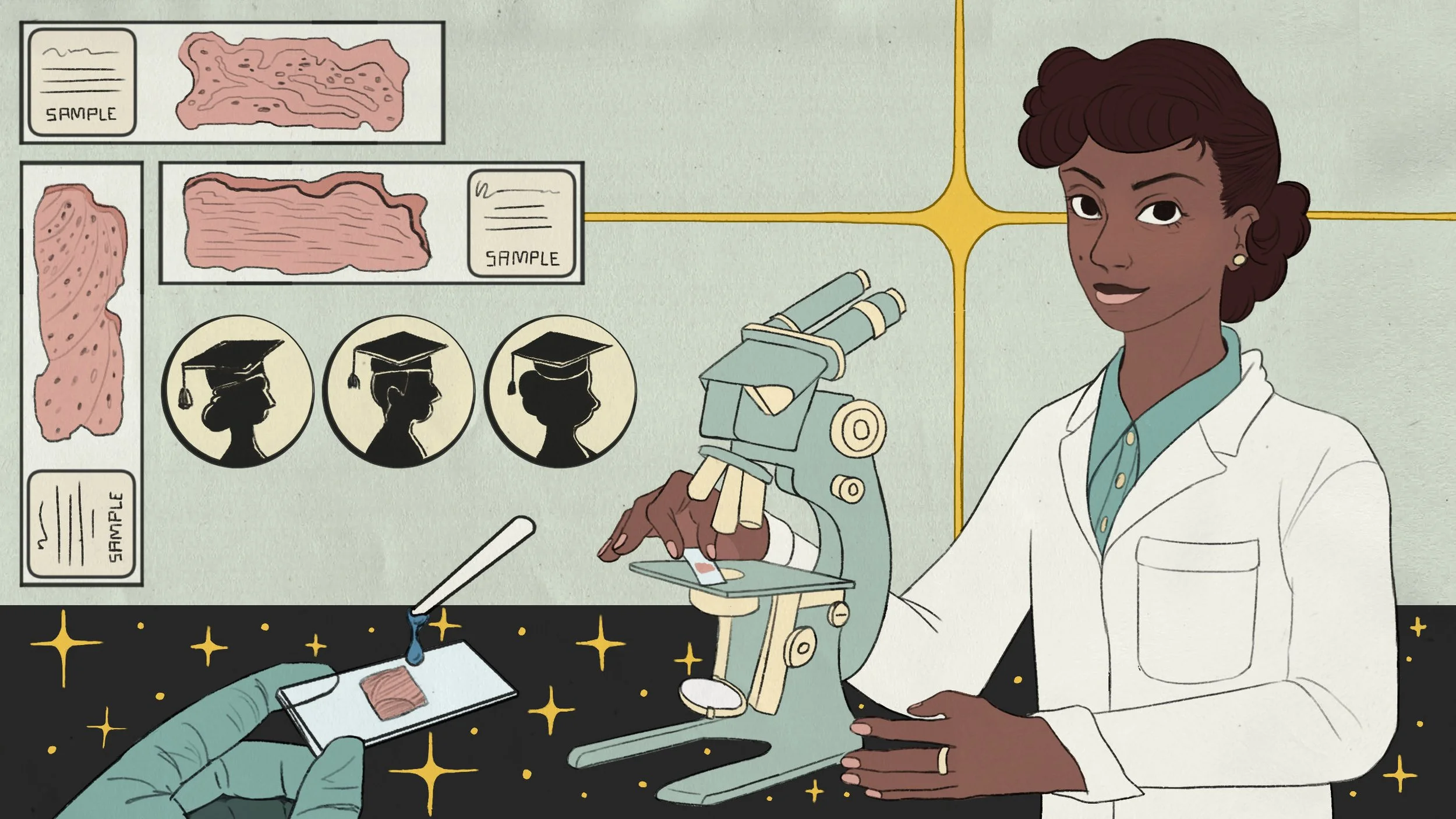
During the First World War, Meitner worked as an X-ray technician and nurse, applying her knowledge of radiation in medical care while her scientific work continued under strain.
By the war’s end, Meitner’s scientific authority was firmly established. In 1917, she was appointed head of the physics section at the Kaiser Wilhelm Institute, and in 1919, she became the first woman in Germany to be appointed professor of physics.
The Berlin years established a pattern that would recur throughout Meitner’s career. For years, she had worked without salary, without full access, and without the ordinary forms of institutional belonging granted to male colleagues. This tension would remain one of the defining conditions of her scientific life.
Spectra, Silence, and the Shape of the AtomBy the time Lise Meitner secured a stable position at the Kaiser Wilhelm Institute, she had already earned a reputation as an inventive physicist working at the edge of a still-emerging field. The atomic nucleus remained poorly understood, and the neutron had yet to be discovered. Within that uncertainty, Meitner combined experimental precision with theoretical clarity, helping develop both the methods and the questions that would shape nuclear physics.
Throughout the 1910s and early 1920s, she focused on alpha, beta, and gamma radiation and their relation to nuclear structure. She designed a beta-ray spectrometer capable of measuring the energy distribution of emitted electrons with exceptional precision, allowing her to connect radioactive decay to nuclear masses and binding energies. She also refined the use of the cloud chamber, tracing the curved paths of charged particles through magnetic fields to measure momentum and energy from otherwise invisible events.
One of her most important methodological innovations was the radioactive recoil method. Meitner recognized that when a nucleus emits alpha or beta radiation, conservation of momentum forces the daughter nucleus to recoil. If the radioactive source was sufficiently thin, those recoiling nuclei could escape and be collected, allowing physical separation without chemical intervention. The technique proved highly effective for isolating small quantities of new elements and soon became standard in nuclear research. These methods contributed to one of the most significant discoveries of her collaboration with Otto Hahn: the identification of protactinium. In 1917, Hahn and Meitner isolated a long-lived isotope of element 91, naming it protactinium to reflect its role as the parent of actinium in radioactive decay chains. Scarce, highly radioactive, and difficult to study, protactinium filled an important gap in the periodic table and demonstrated the power of combining physical insight with chemical technique.
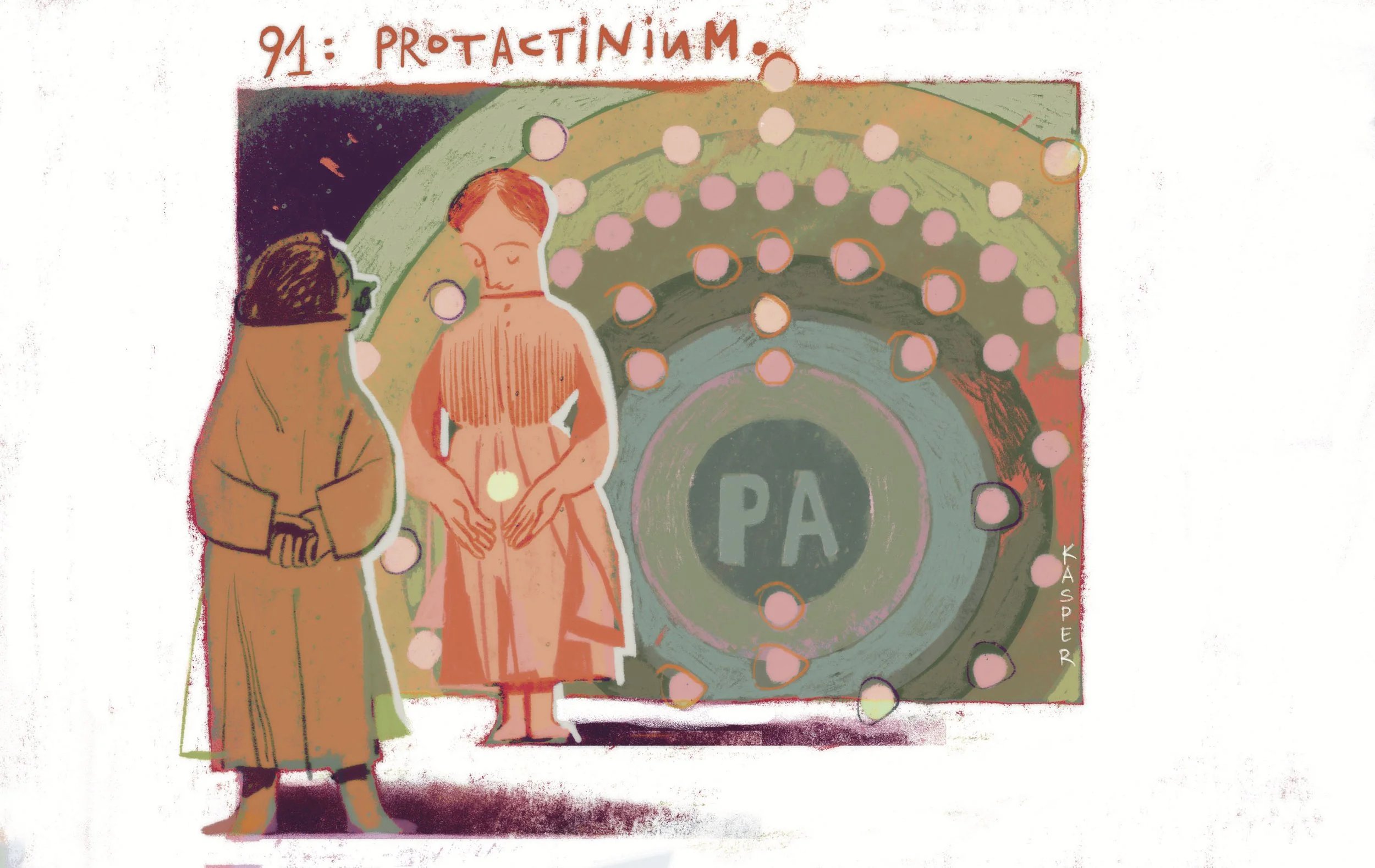
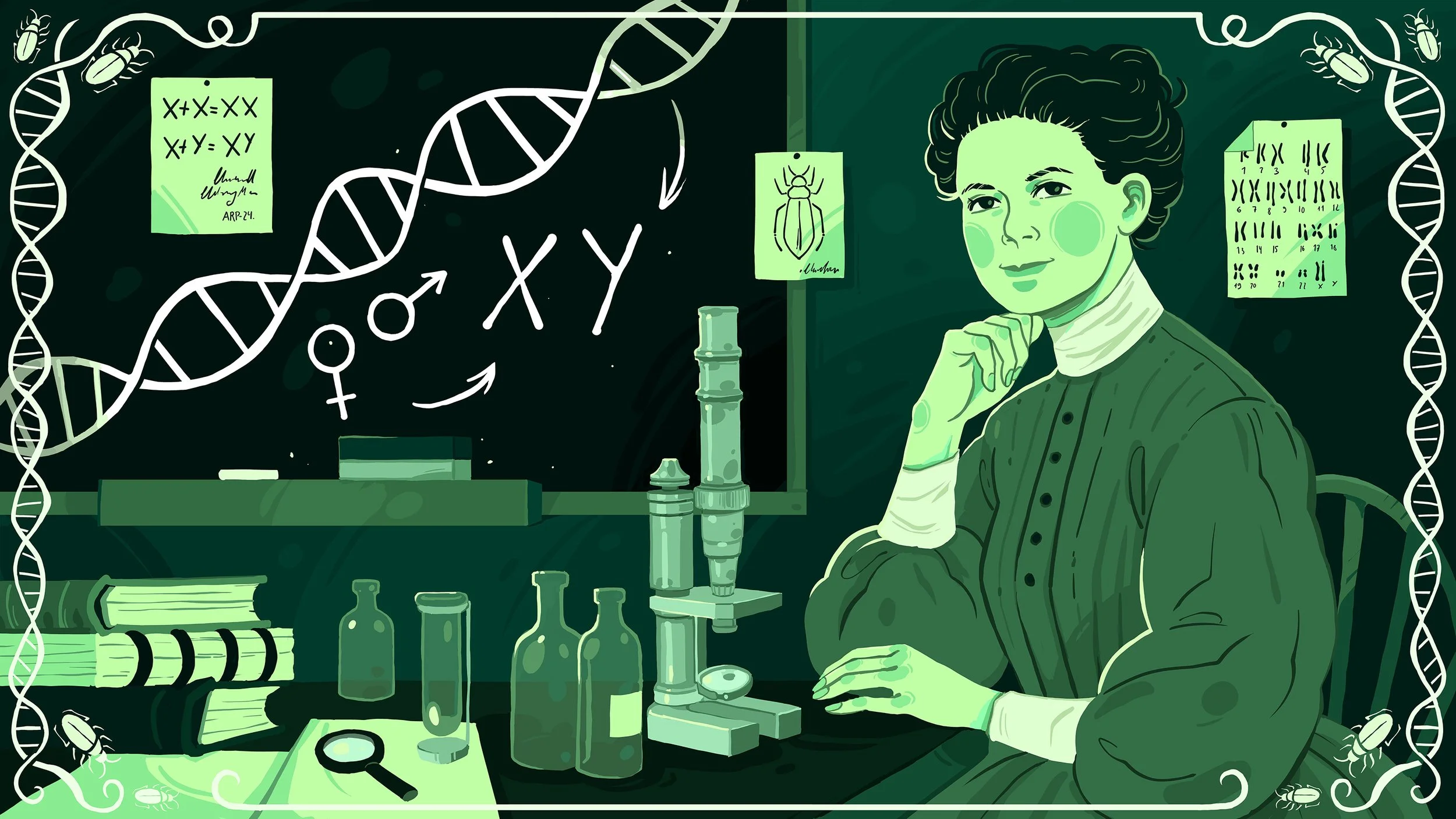
In 1917, Meitner and Otto Hahn identified protactinium, a major achievement in early nuclear science and one of the most important discoveries of their long collaboration.
Meitner also deepened the understanding of how radioactive decay unfolded within the atom.
She showed that gamma radiation followed alpha or beta decay and demonstrated through precise energy measurements that these emissions were analogous to atomic spectra rather than incidental byproducts. In 1922, she identified another striking phenomenon: in some cases, nuclear energy was transferred directly to an orbital electron, ejecting it without the emission of a photon. This radiationless transition was later independently described by the French physicist Pierre Victor Auger, whose name ultimately became attached to the effect in textbooks.
Meitner’s work also extended to broader questions of nuclear organization. Through studies of isotopes and isobars, she identified patterns suggesting that protons formed even-numbered groupings within the nucleus, a finding later understood in relation to pairing effects. She also used the distribution of lead isotopes in minerals to estimate the age of the Earth, an ambitious effort that reflected the reach of radioactive methods into questions far beyond the laboratory.
In 1933, Meitner made another important observation when she identified positron tracks in a cloud chamber from processes not attributed to cosmic rays, placing her once again at the forefront of new nuclear phenomena. By then, her work moved fluidly between theory and experiment. She was not simply applying existing methods. She was helping define what nuclear physics could investigate.
Recognition followed, though unevenly.
Meitner received the Leibniz Medal from the Berlin Academy of Sciences and the Lieben Prize from the Austrian Academy of Sciences, marking her as one of the leading physicists of her generation. She was appointed head of the physics section at the Kaiser Wilhelm Institute in 1917, became the first woman in Germany to be appointed professor of physics in 1919, and in 1926 became Germany’s first female full professor of physics.
These contributions make clear that Meitner’s legacy cannot be reduced to 1938. Long before the word ‘fission’ entered scientific vocabulary, Meitner had already helped make the nucleus legible.
Tightening the NooseBy the early 1930s, Lise Meitner held a position of rare distinction within German science. She was a professor, head of the physics section at the Kaiser Wilhelm Institute for Chemistry, and an internationally recognized authority in nuclear physics. Even so, public accounts often softened her intellectual leadership, especially within collaborative work.
The political transformation that followed Adolf Hitler’s appointment as chancellor in 1933 quickly altered the conditions of her life and work. Antisemitic laws and professional exclusions spread across German institutions, targeting Jewish academics and civil servants. Many Jewish scientists left immediately. Meitner did not. Her Austrian citizenship gave her temporary legal protection, allowing her to remain employed for several years after many colleagues had been forced out.
This decision was not born of political naïveté. Letters from the period show that Meitner understood the danger she faced and knew how urgently others wanted her to leave (Miller, 2023). What kept her in Berlin was her attachment to the work she had built over decades.
Between 1933 and 1938, that home steadily disappeared.
Meitner continued to publish and collaborate, but her institutional footing weakened. Jewish colleagues disappeared from academic life. Administrative protections eroded. Remaining in Berlin required constant calculation as the terms of professional survival grew more uncertain.
The rupture came in March 1938, when Nazi Germany annexed Austria. Meitner immediately lost the citizenship status that had shielded her. Reclassified as Jewish under Nazi racial law, she was barred from her position and cut off from the institute and laboratory materials on which her research depended. The loss was professional and deeply personal. Writing to Otto Hahn, she reflected,
Her escape was arranged quickly and in secrecy. Assisted by colleagues and friends, including Niels Bohr, the Danish physicist whose institute would become a refuge for many displaced scientists, Meitner left Germany by train and crossed into the Netherlands with little more than a small suitcase. Among her few possessions was a diamond ring given to her by Otto Hahn, intended as emergency currency if she were detained.
Nearly all of her scientific papers and materials remained behind in Berlin.
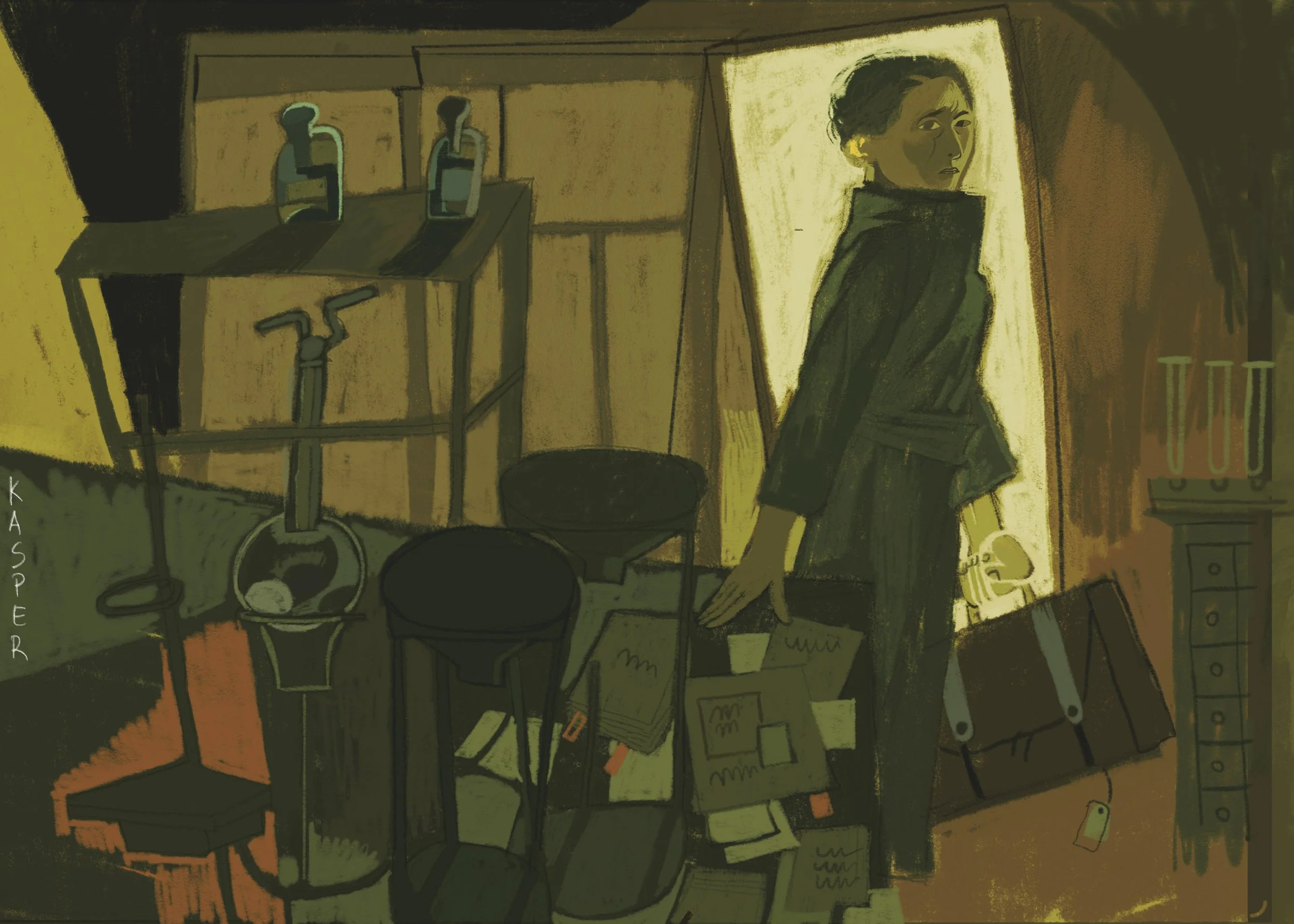
Forced to flee Nazi Germany in 1938, Meitner left behind the laboratory that had become her life’s work and entered exile with little more than a small suitcase.
From the Netherlands, Meitner travelled on to Sweden, where she was offered a position in Stockholm. The move brought safety, but little professional stability.
At the laboratory of Manne Siegbahn, the Swedish physicist who directed the institute, she encountered indifference and open sexism. Siegbahn offered minimal support, leaving her with inadequate facilities and few opportunities to continue experimental work at the level she had reached in Germany.
Letters from this period convey the extent of the loss. Exile severed Meitner from the institutional world she had helped build. She remained intellectually active, however, and continued corresponding with Otto Hahn while following developments in uranium research through letters and reports.
Her role changed. Without a laboratory, she worked increasingly through analysis and interpretation rather than experiment.
The experiments that would lead to the discovery of nuclear fission were approaching their decisive stage, and Meitner’s place in the story was shifting from laboratory leader to exiled interpreter. Her absence from Berlin was not the result of a fading collaboration or a voluntary withdrawal from the work. It was the result of a regime that had, year by year, tightened the noose around her life until there was no room left to remain.
“Some Sort of Fantastic Explanation”Nuclear physics was becoming an increasingly competitive field.
In 1932, James Chadwick, the British physicist who discovered the neutron, identified a neutral particle capable of penetrating even heavy nuclei, transforming the study of atomic structure. Soon after, Enrico Fermi, the Italian physicist whose neutron experiments reshaped the field, and his collaborators began bombarding uranium with neutrons, producing a bewildering range of radioactive products they interpreted as evidence for new transuranic elements heavier than uranium. Across Europe, laboratories raced to understand what neutron-induced radioactivity might reveal about matter itself.
At the Kaiser Wilhelm Institute in Berlin, Otto Hahn and Fritz Strassmann, an analytical chemist and Hahn’s close collaborator, pursued the problem chemically, identifying the products formed when uranium absorbed neutrons. The results defied expectation. Instead of elements just beyond uranium on the periodic table, they repeatedly detected much lighter elements, most strikingly barium, with roughly half the atomic mass of uranium. According to existing nuclear theory, such a result should not have been possible.
Unable to reconcile the findings, in December 1938, Hahn wrote to Meitner in exile, asking whether she could offer an explanation for the appearance of barium among the reaction products, or, as he put it, offer,
That winter, Meitner was in Sweden with her nephew Otto Robert Frisch, a physicist who was also working in nuclear science. Walking together, they reconsidered Hahn and Strassmann’s data (Nanal, 2017; Kellner, 2025). Drawing on the liquid drop model of the nucleus, Meitner proposed a radical possibility. A heavy nucleus like uranium, she suggested, need not simply absorb a neutron. It could deform and split into two smaller nuclei. Frisch later remembered the moment vividly:
The paradox dissolved.
If uranium were divided into two fragments of comparable mass, barium would no longer be inexplicable.
One fragment could be barium, the other a medium-weight element such as krypton.
Sitting on a tree trunk, Meitner then made a quick calculation using Einstein’s relation between mass and energy. The slight loss of mass implied an energy release of roughly 200 million electron volts per event, enormous on the nuclear scale.
The idea was unprecedented.
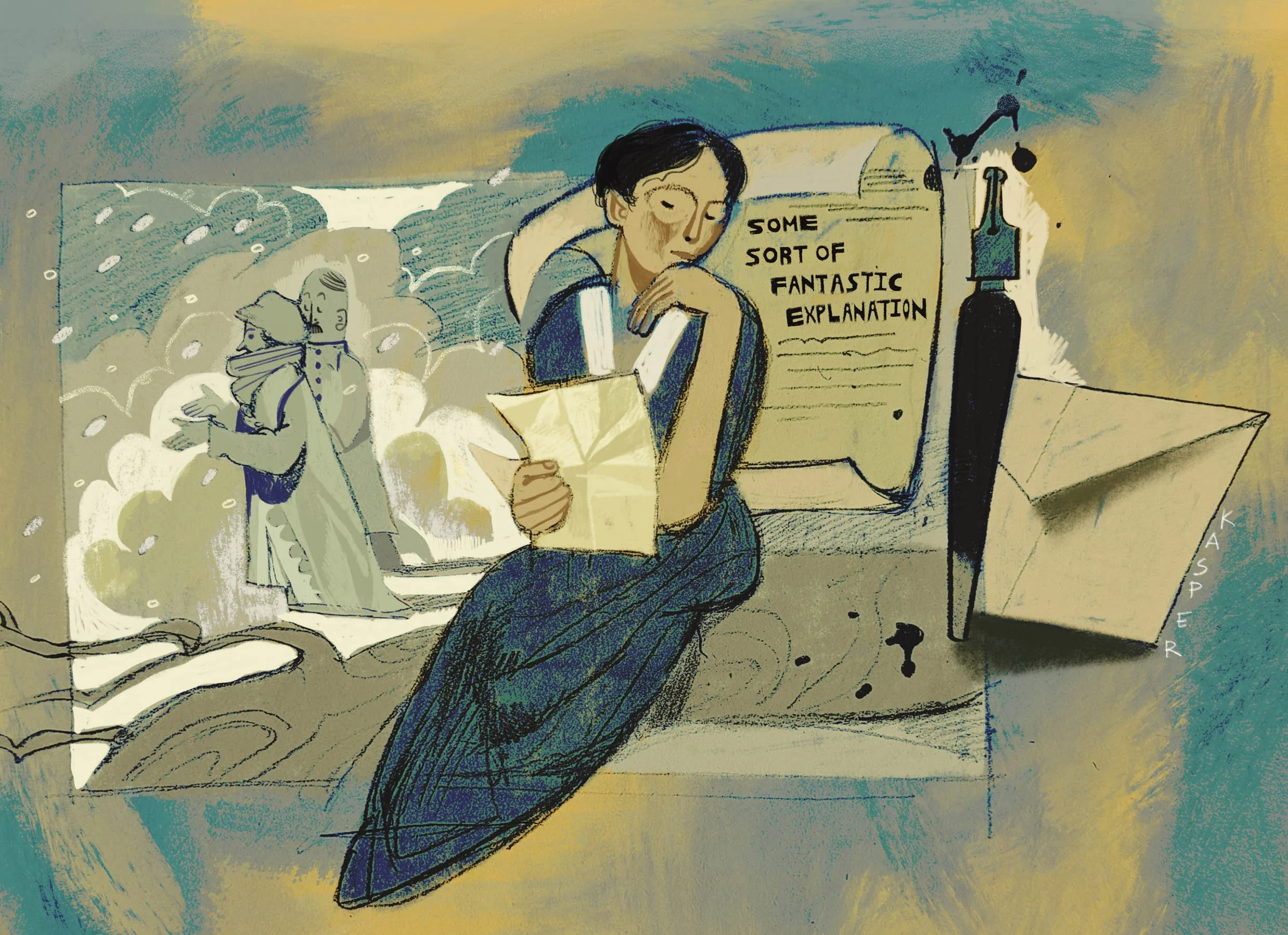
In exile, Meitner and her nephew Otto Robert Frisch worked through the puzzle of uranium’s strange behaviour, arriving at the explanation that became nuclear fission. Hahn had asked for “some sort of fantastic explanation.”
What Hahn and Strassmann had observed was not an unusual decay process, but the splitting of the atomic nucleus.
Meitner and Frisch recognized that the process needed a name. Borrowing from biology, they adopted the term fission. In February 1939, they published a short paper in Nature explaining the physical mechanism behind Hahn and Strassmann’s chemical results and the scale of the energy released. Although Meitner’s name had not appeared on the earlier experimental paper, the Nature letter established her and Frisch as the authors of the first published physical explanation.
Frisch soon provided experimental confirmation, detecting the energetic heavy fragments produced by uranium fission. Laboratories across Europe and the United States rapidly reproduced the results. Within months, dozens of papers confirmed the phenomenon and began exploring its implications.
The discovery was fundamentally collaborative. Hahn and Strassmann supplied the chemical evidence. Meitner and Frisch supplied the physical explanation. Experiment and theory, chemistry and physics, Berlin and exile converged in a single intellectual breakthrough. In private correspondence, Meitner acknowledged both the discovery and the conditions under which she had helped explain it. Writing to Hahn, she noted,
Fission emerged through chemical evidence, physical reasoning, and collaboration sustained across borders at the moment when politics had forced one of its key interpreters into exile.
The Burden of DiscoveryThe implications of nuclear fission were recognized almost immediately. The immense energy released when a heavy nucleus splits, combined with the emission of additional neutrons, suggested the possibility of a self-sustaining chain reaction. Within months of the first fission papers, physicists understood that such reactions might lead either to controlled energy production or to unprecedented destruction.
Governments moved quickly. In 1939, Leo Szilard, the Hungarian physicist who had long worried about chain reactions, persuaded Albert Einstein to write to United States President Franklin D. Roosevelt about the possibility that Nazi Germany might pursue atomic weapons. The resulting Einstein-Szilard letter helped set in motion what became the Manhattan Project. Lise Meitner was not involved in the letter, but the discovery she had helped explain lay at the centre of the fears that prompted it.
During the war years, Meitner was repeatedly invited to join American atomic weapons research. Each time, she refused. Her response was unequivocal:
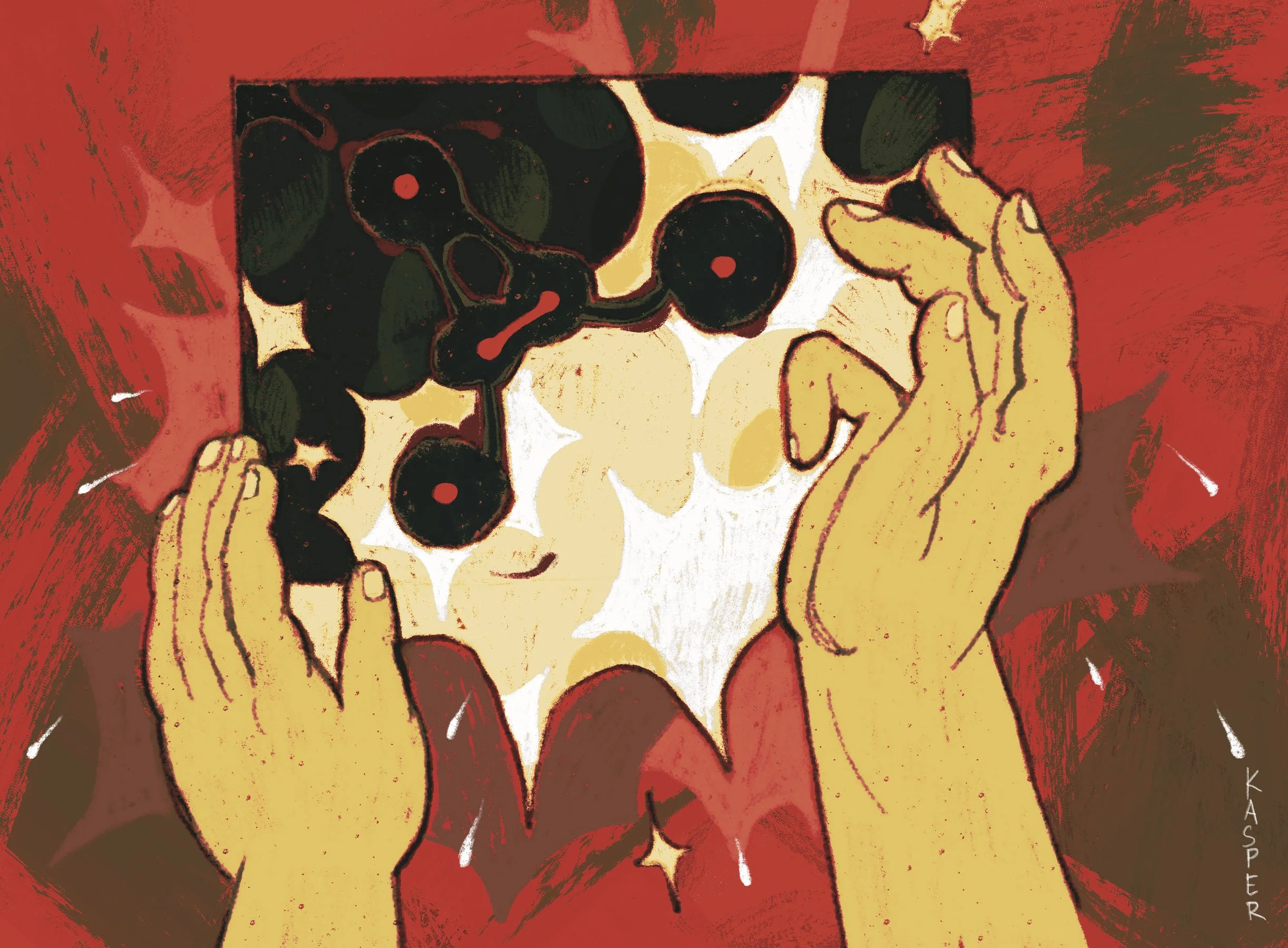
Meitner’s explanation of nuclear fission showed that a heavy nucleus could split into smaller nuclei and release an immense amount of energy.
The refusal was not symbolic. It meant excluding herself from the most powerful and best-funded physics project of the era.
Her ethical position was firm, but carefully drawn. Meitner rejected the weaponization of nuclear physics, yet she also argued that scientists should not be held wholly responsible for the uses states and militaries made of discoveries once they left the laboratory. She did not treat science as morally neutral. She insisted, rather, on a distinction between understanding nature and choosing how that knowledge would be used.
Public discussion in the United States often ignores that distinction.
After Hiroshima and Nagasaki, Meitner was repeatedly described as the “mother of the atomic bomb,” a label she found both inaccurate and offensive. It collapsed explanation into invention and invention into responsibility, while imposing a gendered frame that misrepresented both her role and her opposition to the bomb.
The mischaracterization appeared starkly in 1946, when Meitner was named “Woman of the Year” by the Women’s National Press Club. At a dinner in her honour, President Harry Truman reportedly greeted her as “the little lady who got us into all of this,” implying her involvement in the bomb’s creation (EPA, 2025). The remark captured how far public memory had drifted from the historical record. Meitner had not built the bomb, advised on its use, or supported its deployment.
Meitner understood that fission had permanently altered the relationship between science and state power.
What she refused was to let that fact define either the meaning of her work or the terms of her conscience.
48 TimesIn 1944, the Nobel Committee awarded the Prize in Chemistry to Otto Hahn for his discovery of the fission of heavy nuclei. The announcement came while Hahn was interned by Allied forces at Farm Hall in England, with the formal presentation following the next year. Absent from the citation were Fritz Strassmann, who carried out much of the chemical identification of the fission products, and Lise Meitner, whose physical interpretation made the results intelligible. The omission would shape how nuclear fission was remembered for decades.
The official Nobel presentation speech mentioned Meitner only briefly, identifying her as Hahn’s long-time collaborator while treating chemistry as the decisive element in the discovery. Strassmann was similarly diminished, described less as a scientific partner than as a subordinate assistant. In reducing an interdisciplinary breakthrough to a single discipline, the committee produced a narrower account than the history itself supported.
Privately, Hahn’s view of Meitner’s role was more complex. In correspondence before and after the discovery, he repeatedly turned to her when experimental results resisted explanation. Publicly, however, he often described her in more limited terms, at times referring to her as a co-worker rather than as an equal collaborator. That gap between private dependence and public framing became one of the enduring tensions in the historical record.
The Nobel nomination archives, opened to researchers decades later, offer a clearer view of how often Meitner’s work was recognized by her peers and overlooked by the prize committees.
She was nominated for the Nobel Prize 48 times: 29 times in Physics between 1937 and 1965, and 19 times in Chemistry between 1924 and 1948.
Her nominators included some of the most respected scientists of the twentieth century, many of whom explicitly cited her role in explaining nuclear fission. Despite this sustained support, the Nobel committees repeatedly declined to award her the prize, either alone or jointly.
The reasons were never stated in simple terms, but some patterns are clear. The chemistry committee consistently privileged experimental isolation and chemical proof over theoretical interpretation, placing Meitner at a disciplinary disadvantage as a physicist explaining results published by chemists. Her decisive contribution had also been made from exile, communicated through correspondence and interpretation rather than produced inside the Berlin laboratory itself.
These disciplinary preferences were shaped by broader exclusions as well. Meitner was a woman in a prize culture dominated by men, Jewish in an era marked by antisemitism, and a refugee whose most consequential insight emerged outside the country where the experimental work was carried out. No single factor fully explains her exclusion. Taken together, however, they help explain how it became possible.
Publicly, Meitner said little about the Nobel controversy. She avoided interviews and did not build a public case around her own recognition. Privately, her letters tell a more complicated story. Writing to her nephew Otto Frisch, she suggested that Hahn’s reluctance to advocate more openly for her role may have affected the committee’s view, even as she insisted that the omission would not determine her scientific identity.
By the time historians could study the archives in detail, the public narrative had long been set. Hahn’s name had become firmly attached to the discovery of fission, while Meitner’s role was too often treated as secondary or supplementary.
The record of 48 nominations does not suggest a scientist overlooked once.
It suggests a pattern of recognition repeatedly deferred. The Nobel Prize was meant to honour discoveries of lasting consequence. Meitner’s work changed the history of modern physics, whether the committee acknowledged it or not.
Element 109After the Second World War, Lise Meitner did not return to the scientific centre she had lost. She remained in Sweden, became a Swedish citizen, and continued her work under far more modest conditions than those she had once commanded in Berlin. The Swedish Atomic Energy Commission provided her with a small laboratory at the Royal Institute of Technology, allowing her to continue research without the institutional scale of her earlier career. She also accepted visiting professorships and lectured widely, especially in the United States, where audiences were eager to hear from a scientist whose work had helped reshape modern physics.
Recognition came unevenly, but it did come. In 1946, Meitner was named “Woman of the Year” by the Women’s National Press Club. In 1949, she received the Max Planck Medal, an important acknowledgment from the German scientific community that had once excluded her. Universities in Europe and the United States awarded her honorary doctorates, and she was elected to major academies, including the Royal Society of London and the American Academy of Arts and Sciences.
A more explicit institutional recognition came in 1966, when Meitner shared the Enrico Fermi Award with Otto Hahn and Fritz Strassmann. The citation honoured their collective work on radioactivity and nuclear fission, recognizing the discovery as an interdisciplinary achievement rather than a solitary triumph. The award could not undo the earlier Nobel omission, but it did publicly affirm Meitner’s central role.
Institutional memory continued to shift. In 1958, Berlin’s Nuclear Physics Institute was renamed the Hahn-Meitner Institute, symbolically reconnecting her name to the place where much of her scientific life had unfolded. In 1997, element 109 was named meitnerium in her honour. With that decision, Meitner became one of the very few women, alongside Marie Curie, to have an element named after her. The tribute was especially fitting for a physicist whose work had transformed the understanding of heavy nuclei.
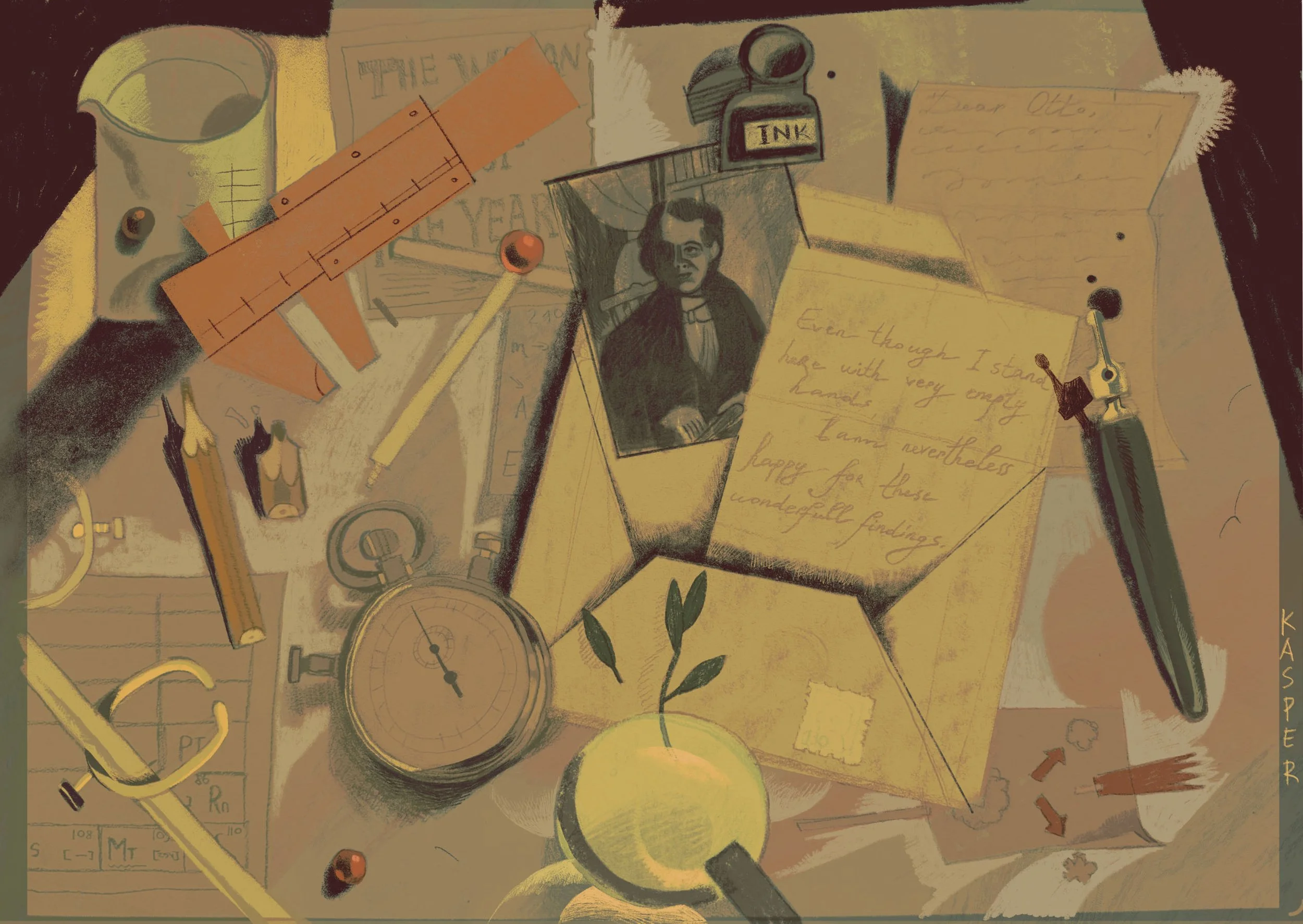
A reimagined view of Meitner’s working table, where calculation, correspondence, and careful thought shaped a life in physics.
In her final years, Meitner moved to Cambridge, England, to be closer to family. She lived quietly, continued corresponding with scientists, and reflected on the scientific and political upheavals she had witnessed across the century. She died in 1968 at the age of eighty-nine and was buried in Bramley, Hampshire, beside her brother Walter.
Her gravestone, inscribed by her nephew Otto Frisch, reads simply:
In the decades since her death, historians, journalists, and educators have worked to place Meitner more fully within the history of nuclear physics from which she was long partly excluded. Public history initiatives, institutional features, student scholarship, and major reassessments in Physics World and The New York Times have all contributed to that effort.
The process is ongoing, but her place in the story is now harder to ignore.
“You Must Not Blame Us Scientists”Lise Meitner spent much of her life insisting on distinctions that the twentieth century often tried to collapse. After the atomic bomb, when science itself seemed to stand accused, she expressed one of them with unusual clarity:
That statement has sometimes been misunderstood. Meitner did not deny the world-shaping power of scientific discovery, nor did she minimize the devastation of nuclear weapons. She understood better than most that fission had altered the relationship between knowledge and power. What she rejected was the idea that understanding nature required assent to the uses others might make of that knowledge.
Her life resists any simple moral narrative of the Atomic Age. She was neither an architect of the bomb nor untouched by its consequences. She was a foundational nuclear physicist who helped make new forms of energy imaginable, then refused to participate in turning that knowledge into a weapon. That refusal remains one of the clearest expressions of her ethical position.
Meitner’s life also makes visible the conditions under which science is done and remembered. Credit does not flow automatically to insight. It is shaped by institutions, politics, discipline, gender, exile, and the stories later told about discovery. Her career shows all of this with unusual clarity.
Lise Meitner changed our understanding of the atom.
In recent years, historians, educators, and journalists have returned to her story with renewed urgency, working to restore her to the history of nuclear physics as a central figure whose absence long distorted the record.
This work remains unfinished.
Remembering Meitner is not only a matter of assigning credit more accurately. It is also a reckoning with how responsibility is framed, how recognition is withheld, and how scientific lives are shaped by the worlds in which they unfold.
Her life makes clear that discovery alone is never the full measure of a scientific career. What follows from it matters just as much.
We have authored and illustrated this entry with care and respect, aiming to achieve the highest standards through diligent, balanced research. We also strive to maintain the highest standards of accuracy and fairness to ensure information is diligently researched and regularly updated. Please contact us should you have further perspectives or ideas to share on this article.
-
Atomic Heritage Foundation. (2022). Lise Meitner. https://ahf.nuclearmuseum.org/ahf/profile/lise-meitner/
Bowersox, P. (2012, February 14). Lise Meitner’s fantastic explanation: Nuclear fission. Nuclear Newswire. https://www.ans.org/news/article-938/lise-meitners-fantastic-explanation-nuclear-fission/
Britannica Editors. (2025, November 3). Lise Meitner. In Encyclopedia Britannica. https://www.britannica.com/biography/Lise-Meitner
Environmental Protection Agency. (2025, March 10). Women in radiation history: Lise Meitner. United States Environmental Protection Agency. https://www.epa.gov/radtown/women-radiation-history-lise-meitner
Frisch, O. R., & Wheeler, J. A. (1967, November). The discovery of fission. Physics Today, 20(11), 43–47. https://doi.org/10.1063/1.3034021
Harris, M. (2020, October 8). Overlooked for the Nobel: Lise Meitner. Physics World. https://physicsworld.com/a/overlooked-for-the-nobel-lise-meitner/
Hattersley, E. (n.d.). The women behind the science: Lise Meitner. UK Research and Innovation. https://www.ppd.stfc.ac.uk/Pages/Lise-Meitner.aspx
Kellner, E. (2025, August 8). Lise Meitner: The forgotten mother of nuclear fission. McGill University. https://www.mcgill.ca/oss/article/student-contributors-history-general-science/lise-meitner-forgotten-mother-nuclear-fission
Meitner, L. (2001). Physics and friendships. In W. H. Brock (Ed.), Great physicists (pp. 330–343). Oxford University Press. https://doi.org/10.1093/oso/9780195137484.003.0022
Miller, K. (2023, October 2). Why the “mother of the atomic bomb” never won a Nobel Prize. The New York Times. https://www.nytimes.com/2023/10/02/science/lise-meitner-fission-nobel.html
Nanal, V. (2017). Lise Meitner (1878–1968): A physicist who never lost her humanity. Resonance, 22(3), 193–197. https://doi.org/10.1007/s12045-017-0451-8
Rife, P. (2007). Lise Meitner and the dawn of the nuclear age. Birkhäuser.
Sime, R. L. (1997). Lise Meitner: A life in physics. University of California Press.
Skinner, A. C. (2022). Lise Meitner. In Research starters: History. EBSCO Information Services. https://www.ebsco.com/research-starters/history/lise-meitner
-
Website Name: The Matilda Project
Title of Entry: Lise Meitner, Nuclear Physicist: The Mother of Nuclear Fission
Author: Shehroze Saharan
Illustrator: Anastasiia Pohorelova
Original Publication Date: May 03, 2026
Last Updated: May 03, 2026
Copyright: CC BY-NC-ND
Webpage Specific Tags: Lise Meitner; Nuclear physicist; Nuclear physics; Nuclear fission; Radioactivity; Atomic nucleus; Protactinium; Neutron; Uranium; Barium; Otto Hahn; Otto Robert Frisch; Fritz Strassmann; Max Planck; Ludwig Boltzmann; Franz Exner; Niels Bohr; Manne Siegbahn; James Chadwick; Enrico Fermi; Kaiser Wilhelm Institute; University of Vienna; Berlin physics; Vienna science; Women in science; Women in STEM; Jewish scientists; Scientific exile; Refugee scientists; Nazi Germany; Anschluss; Scientific ethics; Manhattan Project; Atomic bomb; Mother of the atomic bomb; Nobel Prize controversy; Nobel Prize omission; Nobel nominations; Physics history; History of nuclear science; History of physics; Scientific recognition; Scientific marginalization; Gender and science; Antisemitism in science; Exile and science; Women in twentieth-century science; Atomic Age; Ethics of science; Radiation research; Gamma radiation; Beta decay; Cloud chamber; Radioactive recoil method; Meitnerium; Hahn-Meitner Institute.
Website Tags: The Matilda Project, The Matilda Effect; Margaret W. Rossiter; Matilda Joslyn Gage; Implicit bias; Unconscious bias; Gender attribution bias; Scientific recognition bias; Gender discrimination in academia; Stereotype threat; Pay gap in STEM; Glass ceiling in science; Sexism in scientific research; Gender stereotypes in education; Gender bias in peer review; Bias in STEM hiring practices; Impact of gender bias on scientific innovation; Underrecognition of female scientists; History of women in science; Women scientists in history; Notable women in science; Pioneering women scientists; Women Nobel laureates; Female role models in science; Gender disparities in scientific research; Women's suffrage movement; Historical women's rights leaders; Historian of science; STEM gender gap; Women in STEM; STEM education; Challenges faced by women in STEM; Representation of women in tech; Initiatives to support women in STEM; Gender equity in STEM education; Encouraging girls in STEM; STEM outreach programs; Diversity in STEM curriculum; Equity, Diversity, Inclusion; Equity in education and workplace; Diversity training; Inclusion strategies; Inclusive leadership; Gender equality; Racial equity; Pay equity and transparency; Representation in media.
-
APA Citation:
Saharan, S. (2026, May 3). Lise Meitner, Nuclear Physicist: The Mother of Nuclear Fission. The Matilda Project. https://www.thematildaproject.com/scientists/lise-meitner
Author
Shehroze Saharan
Senior Manager, Institutional AI Strategy Development and Support, Office of the Vice-President, Digital Transformation and Chief Information Officer at George Brown Polytechnic
Shehroze Saharan is the Senior Manager, Institutional AI Strategy Development and Support at George Brown College, where he leads the development and implementation of a college-wide strategy for the ethical and strategic integration of artificial intelligence across academic and operational environments. His work spans AI research and policy, adoption support, employee training, and faculty engagement, while also advising senior leadership on aligning AI initiatives with the college’s broader digital transformation agenda.
Previously, Shehroze served as Educational Technology Developer at the University of Guelph, where he was the institution’s pedagogical lead on AI in Education (AIED). He is also the founder and leader of the Teaching with Artificial Intelligence Conference, now the largest AI in Education event in Canada.
Shehroze holds a Master of Information from the University of Toronto and a Bachelor of Science in Biomedical Science from the University of Guelph. He is currently completing his Ph.D. at the Ontario Institute for Studies in Education (OISE), University of Toronto, where his research explores Generative AI in curriculum and pedagogy.
Beyond his institutional role, Shehroze is the Managing Director and Co-Founder of The Matilda Project, an award-winning open educational initiative that highlights the contributions of historically overlooked women in science.
Illustrator